oil
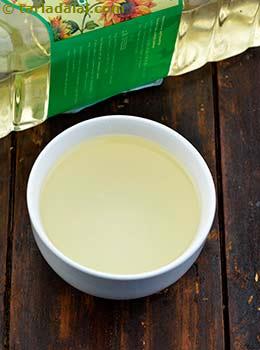
Table of Content

Also Known as
Tel
What is oil, cooking oil, tel?
Cooking oil is purified fat of plant or animal origin, which is liquid at room temperature. There are several kinds of edible vegetable oils including olive oil, palm oil, soybean oil, canola oil, pumpkin seed oil, corn oil, sunflower oil, safflower oil, peanut oil, grape seed oil, sesame oil, and rice bran oil. Many other kinds of vegetable oils are also used for cooking.
How to Select oil, cooking oil, tel
• Oil is available throughout the year, in several varieties, several brands and several pack sizes.
• Oil can become rancid from exposure to light and heat; so buy a pack size you need and not too much.
• Look for oils that are sold in dark tinted bottles since the packaging will help protect the oil from oxidation caused by exposure to light.
• In addition, make sure the oil is displayed in a cool area, away from any direct or indirect contact with heat.
Culinary Uses of oil, cooking oil, tel
• Oil is a basic cooking ingredient, essential for sautéing, frying, tempering as well as for salad dressing.
• It provides a medium for foods to be cooked and enhances the taste and makes it appealing.
•
Curries and sabzis using oil
Little oil is needed to cook all the masalas that go in the curry. Try this amazing curries and gravies and enjoy with your favourite roti or paratha.
Low Calorie Dal Makhani a flavourful robust lentil preparation, is a celebrated delicacy from Punjab. Best had with the healthy makki ki roti.
Malai Kofta Curry a creamy tomato-flavoured gravy that soothes and cradles your taste buds, that is what the Malai Kofta Curry is!
Palak Paneer one of the many of the best loved vegetarian Punjabi dishes are the ones where paneer is combined with a vegetable.
Achari Paneer most commonly consumed source of protein for vegetarians. Due to its bland flavour and ability to absorb any flavour as in this Punjabi achari paneer recipe.
Bhindi Masala your favourite dry lady finger sabzi is as tasty as ever, as the bhindi is stuffed with a mouth-watering mixture of spices and spice powders.
Methi Mutter Malai a super-hit combination as their flavours complement each other well. Add to this a fragrant masala paste, an even more zestful freshly-ground dry masala.
Paneer Tikka Masala a flavourful marinade of assorted spice powders and dried fenugreek leaves makes the succulent cubes of paneer quite exciting to bite.
Aloo Methi an everyday Punjabi sabzi ... easy, tasty and awesome. Yet, every time you taste it, potatoes with fenugreek leaves feels exotic.
• While frying foods in oil, it is essential to maintain it at the right temperature. If the oil is too hot, the coating will burn from the direct heat of the oil before the food has had time to cook. The longer oil is heated, the more quickly it will decompose. Avoid preheating the oil any longer than necessary. If youre cooking more than one batch of food, quickly add each new batch, unless time is needed to adjust the cooking temperature. Turn off the heat as soon as youve removed the last food batch from the oil. Cool. When the oil is cool enough to handle, strain it through paper towels, coffee filters or cheesecloth into an empty container. Do not mix it with unused oil.
How to Store oil, cooking oil, tel
• Whether refined or not, all oils are sensitive to heat, light and exposure to oxygen. Rancid oil has an unpleasant aroma and acrid taste, and its nutrient value is greatly diminished. So, store all oils in a cool, dry place.
• Oils may thicken, but if you let them stand at room temperature they will soon return to liquid.
• Oil darkens with use when subjected to high/prolonged heat.
• If the oil has a rancid or "off" smell or if it smells like the foods youve cooked in it, it should be discarded.
Health Benefits of oil, cooking oil, tel
•
• However, excess oil intake is proven to have ill effects leading to lethargy, fatigue, weight gain, cardiac arrest etc.
.webp?w=360&h=250&fit=cover&format=webp)
chilli oil

Related Recipes
Vegetable Manchurian ( Easy Chinese Recipe )
Palak Paneer, How To Make Homemade Palak Paneer Recipe
Veg Frankie, Mumbai Roadside Recipe
Sambar Recipe, South Indian Homemade Sambar Recipe
Coconut Chutney ( Idlis And Dosas)
Pav Bhaji ( Mumbai Roadside Recipes )
More recipes with this ingredient...

Related Glossary
Follow US
Recipe Categories
- Vitamin B12 Cobalamin Rich Recipes 33 recipes
- Low Calorie, Weight Loss Indian Recipes 421 recipes
- Low Cholesterol Indian Recipes 308 recipes
- Healthy Indian Breakfast 373 recipes
- Indian Diabetic recipes 559 recipes
- Indian Pregnancy recipes 461 recipes
- Zero Oil Indian Recipes 133 recipes
- Iron Rich Indian recipes 268 recipes
- Healthy Indian Acidity recipes 133 recipes
- Healthy Sabzis 108 recipes
- Indian Healthy Veg Snack 276 recipes
- Healthy Heart Recipes 415 recipes
- Healthy Veg Indian Soups 74 recipes
- Calcium Rich Indian Recipes 373 recipes
- High Blood Pressure Indian Recipes 103 recipes
- Healthy Indian Salads Recipes 137 recipes
- Low Carb Indian Diet, recipes 163 recipes
- Hypothyroidism Diet 63 recipes
- Arthritis Diet 68 recipes
- High Protein Indian recipes 94 recipes
- Vitamin K Diet 42 recipes
- Fatty Liver Diet 39 recipes
- PCOS 136 recipes
- Gluten Free Veg Indian 196 recipes
- High Fiber 328 recipes
- Indian Cancer Patients 275 recipes
- Jaundice Diet 45 recipes
- Sprouts 61 recipes
- Typhoid 43 recipes
- Irritable Bowel Syndrome (IBS) 23 recipes
- Kidney Stone Diet 10 recipes
- Home Remedies 213 recipes
- Senior Citizen 195 recipes
- Healthy Indian Drinks and Juices 213 recipes
- Diet for Dialysis 10 recipes
- Gout Indian Recipes 17 recipes
- Potassium Rich 80 recipes
- Vegan 195 recipes
- Indian recipes to treat Vomiting 8 recipes
- Forever Young Diet, Anti Aging Indian Diet 255 recipes
- Antioxidant Rich Indian 445 recipes
- Vitamin B1 Rich Indian Foods, Recipes 101 recipes
- High in Omega 3 Fatty Acids 32 recipes
- Zinc Rich Foods 55 recipes
- Vitamin A Rich, Beta Carotene, Retinol 89 recipes
- Malaria Diet 19 recipes
- Magnesium Rich 94 recipes
- Healthy Indian Dinner 85 recipes
- Vitamin C Rich Indian recipes 118 recipes
- Low Veg Glycemic Index 86 recipes
- Lower Blood Pressure Salads 8 recipes
- Healthy Indian Lunch Recipes 29 recipes
- Lactation 25 recipes
- Vitamin E Rich 51 recipes
- Hyperthyroidism Diet 47 recipes
- Vitamin B3, Niacin Rich 41 recipes
- Post Surgery Diet 42 recipes
- Selenium 27 recipes
- Lower Blood Pressure Desserts Sweets 14 recipes
- Phosphorus Rich Indian Recipes, Foods 74 recipes
- Copper 15 recipes
- Foods Rich in Vitamin B2 Riboflavin 22 recipes
- Vitamin B6 Diet 36 recipes
- B Vitamins 231 recipes
- Vitamin B9 Rich Folate 50 recipes
- Marathoners, Endurance Athletes, Triathlete 225 recipes
- Manganese Diet 32 recipes
- Thalassemia 18 recipes
- Detox Water, Fruit Infused Water 42 recipes
- Lactose Free Dairy Free 22 recipes
- Omega 6 Fatty Acids 32 recipes
- Phytonutrients 51 recipes
- Chronic Kidney Disease Indian recipes 12 recipes
- Selenium1 0 recipes
- Quick Snacks / Quick Starters 385 recipes
- Quick Breakfast Indian 131 recipes
- Quick Sabzis 117 recipes
- Quick Rotis / Parathas 46 recipes
- Quick Indian Sweets 139 recipes
- Quick Stir-Fries 51 recipes
- Quick Vegetarian Indian Soups 72 recipes
- Quick Chutneys 67 recipes
- Quick Vegetarian Rice, khichdi Recipes 56 recipes
- Indian snacks under 10 minutes 44 recipes
- Quick Indian Dips, Gravies & Sauces 105 recipes
- Quick Veg Indian Pizza 17 recipes
- Quick Veg Pasta 25 recipes
- Quick Pickles / Aachar 25 recipes
- Quick Dals / quick Kadhis 29 recipes
- Snacks under 5 minutes 33 recipes
- Quick Healthy Recipes 43 recipes
- Quick Pressure Cooker 46 recipes
- Quick Desserts 47 recipes
- Quick 3 Ingredients 63 recipes
- Quick Indian Desserts 20 recipes
- Quick 4 Ingredients 41 recipes
- Quick 5 Ingredients 42 recipes
- Kids Tiffin Box 319 recipes
- Recipes for Toddlers (1-3 Years) 32 recipes
- Sweet Recipes for Kids 456 recipes
- Recipes for Baby (10 to 12 Months) 17 recipes
- Quick Indian recipes for Kids 72 recipes
- Indian Breakfast Recipes for Kids 192 recipes
- Recipes for Weaning (8 to 9 months) 22 recipes
- Healthy Foods for Kids 196 recipes
- Snack Recipes for Kids 619 recipes
- Recipes Kids can make 36 recipes
- Kids After School 794 recipes
- Kids Jar Snacks 66 recipes
- Finger Foods for Babies, Toddlers and Kids 76 recipes
- Kids Weight Gain 43 recipes
- Kids Wraps and Rolls 23 recipes
- Kids Veg Pasta 27 recipes
- Kids Brain Boosting 68 recipes
- Protein rich food for kids 71 recipes
- Recipes for Weaning 15 recipes
- Kids Pizzas 30 recipes
- Babies, Toddler and Kids Iron Rich Foods 31 recipes
- High Fiber Foods for Kids 39 recipes
- Kids Noodles 37 recipes
- Kids High Energy Indian Foods 103 recipes
- Kids Calcium Rich Indian recipes 92 recipes
- Babies recipes, 6 to 18 months 34 recipes
- Kids Recipes for Increasing Immunity 10 recipes
- Kids Weight Loss 58 recipes
- Teething Recipes for Babies 10 recipes
- Cereals and Pulses for 8 to 9 months Baby 8 recipes
- Weaning foods at 7 months 12 recipes
- Indian Teen 315 recipes
- Starters / Snacks 2138 recipes
- Indian Breakfast Recipes 819 recipes
- Main Course Recipes 925 recipes
- Indian Salads 385 recipes
- Indian Desserts , Sweets 985 recipes
- Indian Soups 249 recipes
- Indian Beverages, Indian Drinks 483 recipes
- Indian Dinner 903 recipes
- Indian Dinner1 0 recipes
- Indian Lunch 829 recipes
- Side Dishes 449 recipes
- Indian Travel Food 433 recipes
- Indian Barbeque1 recipes 22 recipes
- Frozen Foods, Indian Freezer Recipes 67 recipes
- Whole Wheat Recipes 56 recipes
- Indian Comfort Foods 212 recipes
- Dinner Menus 56 recipes
- Easy Indian Veg 70 recipes
- Innovative Indian Recipes 27 recipes
- No Cook Indian 37 recipes
- Advanced Recipes 10 recipes
- Cakes with Eggs 13 recipes
- Microwave 229 recipes
- Oven 619 recipes
- Indian Steamer Recipes 102 recipes
- Kadai Veg 407 recipes
- Indian Barbeque Recipes 43 recipes
- Sizzler tray 15 recipes
- Mixer 566 recipes
- Pressure Cooker 315 recipes
- Tava 647 recipes
- Non-stick Pan 1393 recipes
- Indian Freezer recipes, meals 57 recipes
- Appe Mould 18 recipes
- Pan 223 recipes
- Non Stick Kadai Veg 203 recipes
- kadai Indian 150 recipes
- Refrigerator 176 recipes
- Waffle Indian recipes 6 recipes
- Handi 12 recipes
- Juicer and Hopper 65 recipes
- Grill 31 recipes
- Toaster 21 recipes
- Gas Toaster 8 recipes
- Steam 72 recipes
- No Cooking Veg Indian 335 recipes
- Vegetarian baked Indian recipes 380 recipes
- Boiled Indian recipes 129 recipes
- Deep Fry 260 recipes
- Indian Tawa 265 recipes
- Shallow Fry Indian 25 recipes
- Microwave1 172 recipes
- Saute 273 recipes
- Indian Pressure Cooker 171 recipes
- Stir-fry 101 recipes
- Roasting 0 recipes