
brown rice
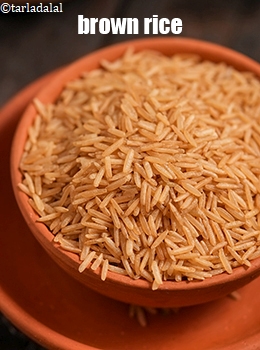
Table of Content

Also known as
Hulled riceWhat is Brown Rice?
Brown rice is partly-milled or un-milled rice, in which only the outermost layer of a grain of rice (husk) is removed. Brown rice is a natural, unbleached grain, and thus retains more nutrients. It has a mild nutty flavour and a brownish colour even after cooking.
Although it was once considered a food that only the poor ate, today brown rice is much more valued than white rice because of its health benefits. Many health-conscious people have adopted brown rice as their staple, as it is as close to the natural state of rice as possible. However, consumption of brown rice is still low, despite its nutritional value, because it takes a longer time to cook than white rice and many people do not enjoy its taste and texture. Moreover, once the husk is removed from rice, the bran starts going rancid, leading to a bitter taste. For this reason, brown rice also has a lower shelf life than white rice.
But, brown rice must be introduced in one’s diet because it is important for the health.
How to select Brown Rice?
• Purchase brown rice from a good source, and look for proper sealed packaging.• Check for a recent date of packaging.
• If buying in loose, ensure the rice does not have a rancid odour, and is free from any kind of grime, dirt, stones etc.
• It is available in long grain, medium grain and short grain varieties. Choose as required.
• Brown rice does not have a long shelf-life, so buy in small quantities as required.
9 ways to use Brown Rice
1. Use it any recipe that uses white rice. However, remember that the taste and texture will vary along with the cooking time involved. But, it is worth the effort as it is definitely more nutritious in recipes like Mushroom Brown Rice.
2. Brown rice takes longer to cook than regular white rice (about 45 minutes vs. 15 or 20 minutes). However, one can cook the rice in advance and use in a wide range of recipes.
3. It tastes especially good in Biryanis. Try the classic Vegetable Biryani.
4. Make some super healthy Khichdi like Brown Rice Khichdi.
5. Make your Dosas with Brown Rice like Neer Dosa and Brown Rice Dosa. We have removed the white rice which makes your favourite Dosas healthy.
6. Combine with salad greens, tomatoes, olives and a tart vinaigrette dressing to make refreshing salads that are definitely a boon for weight watchers.
7. You may use brown rice to make Brown Rice Risotto.
8. Combine brown rice, cheese and aromatic herbs of your choice to make delicious casseroles.
9. Cooked brown rice can be combined with flour, buttermilk and herbs to make crisp and nutritious pancakes.
How to store Brown Rice?
• Store in airtight containers in a cool dry place away from moisture and humidity.• Under such conditions, it can be stored for up to six months.
• Freezing brown rice and using as required is a better option since brown rice gets rancid faster.
What is Health benefits of Brown Rice?
• Brown rice contains magnesium; one cup of cooked long grain brown rice contains 84 mg of magnesium while one cup of white rice contains 19 mg. Thus, it is a better source than white rice.
• The protein present in brown rice has one of the most complete essential amino acids.
• The rice bran layer of brown rice contains digestible fibre, which is not found in milled rice. Thus it is more easily digestible than white rice and also said to be less constipating.
• The oil content of the rice bran is a better source of important nutrients, including vitamin E, thiamin, niacin, vitamin B1, B3, B6, folacin, potassium, magnesium and iron.
• Research says that women who eat whole grains like brown rice tend not to add weight.
• Brown rice contains selenium which minimizes colon cancer risk and also provides significant cardiovascular benefits for post-menopausal women.
• Its a good source of fibre that reduces high cholesterol levels and prevents atherosclerosis and breast cancer.
• Study shows that eating foods high in insoluble fibre, such as brown rice, can help women avoid gallstones.
• It may also reduce the risk of diabetes and is definitely a much healthier option for all.
.webp)
soaked brown rice
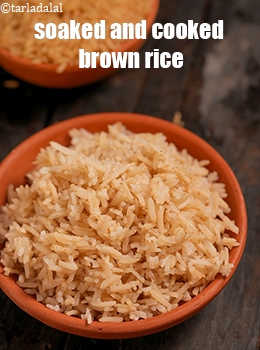
To soften the rice grains a little and to reduce the cooking time, brown rice should be soaked prior to cooking. First clean the rice 2-3 times changing the water each time. You can stop cleaning when the rinsing water is clear. Then, for each cup of rice, add 2-3 cups of fresh water at room temperature, and soak the rice for an hour or two. Drain the water and use as required.
soaked and cooked brown rice
Soak the cleaned brown rice for some time, discard the soaking water, and pressure-cook with 2 ? to 3 times the amount of water by volume of dry brown rice. If cooking in a pan, use 5-6 times water and once the rice is cooked, drain all the excess starch water and cool in a large plate before using in recipes. Brown rice takes longer to cook than other rice. The cooking time can be 35-45 minutes.
.webp)
unpolished brown rice

Related Recipes
Brown Rice ( Pressure Cooker Method)
Chinese Fried Rice, Diabetic Friendly Recipe
Tomato Methi Rice, Healthy Tomato Methi Pulao
Masoor Dal And Vegetable Khichdi
More recipes with this ingredient...
brown rice (55 recipes), soaked brown rice (1 recipes) , soaked and cooked brown rice (16 recipes) , unpolished brown rice (2 recipes)

Related Glossary
.webp)
.webp)
Follow US
Recipe Categories
- Vitamin B12 Cobalamin Rich Recipes 33 recipes
- Low Calorie, Weight Loss Indian Recipes 421 recipes
- Low Cholesterol Indian Recipes 307 recipes
- Healthy Indian Breakfast 372 recipes
- Indian Diabetic recipes 558 recipes
- Indian Pregnancy recipes 461 recipes
- Zero Oil Indian Recipes 133 recipes
- Iron Rich Indian recipes 267 recipes
- Healthy Indian Acidity recipes 132 recipes
- Healthy Sabzis 108 recipes
- Indian Healthy Veg Snack 275 recipes
- Healthy Heart Recipes 415 recipes
- Healthy Veg Indian Soups 74 recipes
- Calcium Rich Indian Recipes 373 recipes
- High Blood Pressure Indian Recipes 100 recipes
- Healthy Indian Salads Recipes 137 recipes
- Low Carb Indian Diet, recipes 160 recipes
- Hypothyroidism Diet 59 recipes
- Arthritis Diet 68 recipes
- Vitamin K Diet 41 recipes
- High Protein Indian recipes 93 recipes
- Fatty Liver Diet 30 recipes
- PCOS 131 recipes
- Gluten Free Veg Indian 193 recipes
- High Fiber 328 recipes
- Indian Cancer Patients 275 recipes
- Jaundice Diet 45 recipes
- Sprouts 61 recipes
- Typhoid 43 recipes
- Irritable Bowel Syndrome (IBS) 20 recipes
- Kidney Stone Diet 9 recipes
- Home Remedies 213 recipes
- Senior Citizen 195 recipes
- Diet for Dialysis 10 recipes
- Healthy Indian Drinks and Juices 213 recipes
- Gout Indian Recipes 17 recipes
- Potassium Rich 80 recipes
- Vegan 194 recipes
- Forever Young Diet, Anti Aging Indian Diet 255 recipes
- Indian recipes to treat Vomiting 7 recipes
- High in Omega 3 Fatty Acids 31 recipes
- Zinc Rich Foods 55 recipes
- Vitamin B1 Rich Indian Foods, Recipes 101 recipes
- Malaria Diet 17 recipes
- Vitamin A Rich, Beta Carotene, Retinol 87 recipes
- Antioxidant Rich Indian 445 recipes
- Low Veg Glycemic Index 86 recipes
- Magnesium Rich 94 recipes
- Lower Blood Pressure Salads 7 recipes
- Healthy Indian Dinner 85 recipes
- Vitamin C Rich Indian recipes 118 recipes
- Healthy Indian Lunch Recipes 29 recipes
- Lactation 25 recipes
- Hyperthyroidism Diet 46 recipes
- Vitamin E Rich 50 recipes
- Vitamin B3, Niacin Rich 41 recipes
- Post Surgery Diet 42 recipes
- Lower Blood Pressure Desserts Sweets 14 recipes
- Selenium 27 recipes
- Phosphorus Rich Indian Recipes, Foods 74 recipes
- Copper 15 recipes
- Foods Rich in Vitamin B2 Riboflavin 22 recipes
- Vitamin B6 Diet 36 recipes
- Vitamin B9 Rich Folate 50 recipes
- B Vitamins 231 recipes
- Manganese Diet 32 recipes
- Marathoners, Endurance Athletes, Triathlete 225 recipes
- Thalassemia 18 recipes
- Detox Water, Fruit Infused Water 42 recipes
- Lactose Free Dairy Free 22 recipes
- Omega 6 Fatty Acids 32 recipes
- Phytonutrients 51 recipes
- Chronic Kidney Disease Indian recipes 12 recipes
- Selenium1 0 recipes
- Quick Snacks / Quick Starters 385 recipes
- Quick Breakfast Indian 132 recipes
- Quick Sabzis 117 recipes
- Quick Rotis / Parathas 46 recipes
- Quick Indian Sweets 139 recipes
- Quick Stir-Fries 51 recipes
- Quick Vegetarian Indian Soups 72 recipes
- Quick Chutneys 67 recipes
- Quick Vegetarian Rice, khichdi Recipes 56 recipes
- Indian snacks under 10 minutes 44 recipes
- Quick Indian Dips, Gravies & Sauces 103 recipes
- Quick Veg Indian Pizza 17 recipes
- Quick Veg Pasta 25 recipes
- Quick Pickles / Aachar 25 recipes
- Quick Dals / quick Kadhis 29 recipes
- Snacks under 5 minutes 33 recipes
- Quick Healthy Recipes 43 recipes
- Quick Pressure Cooker 46 recipes
- Quick Desserts 48 recipes
- Quick 3 Ingredients 63 recipes
- Quick Indian Desserts 18 recipes
- Quick 4 Ingredients 41 recipes
- Quick 5 Ingredients 41 recipes
- Kids Tiffin Box 318 recipes
- Recipes for Toddlers (1-3 Years) 31 recipes
- Sweet Recipes for Kids 453 recipes
- Recipes for Baby (10 to 12 Months) 14 recipes
- Quick Indian recipes for Kids 72 recipes
- Indian Breakfast Recipes for Kids 192 recipes
- Recipes for Weaning (8 to 9 months) 20 recipes
- Healthy Foods for Kids 195 recipes
- Snack Recipes for Kids 619 recipes
- Recipes Kids can make 36 recipes
- Kids After School 794 recipes
- Kids Jar Snacks 66 recipes
- Finger Foods for Babies, Toddlers and Kids 76 recipes
- Kids Weight Gain 43 recipes
- Kids Wraps and Rolls 23 recipes
- Kids Veg Pasta 27 recipes
- Kids Brain Boosting 68 recipes
- Protein rich food for kids 69 recipes
- Recipes for Weaning 13 recipes
- Kids Pizzas 30 recipes
- Babies, Toddler and Kids Iron Rich Foods 31 recipes
- High Fiber Foods for Kids 39 recipes
- Kids Noodles 37 recipes
- Kids High Energy Indian Foods 103 recipes
- Kids Calcium Rich Indian recipes 91 recipes
- Kids Recipes for Increasing Immunity 10 recipes
- Babies recipes, 6 to 18 months 31 recipes
- Kids Weight Loss 58 recipes
- Teething Recipes for Babies 10 recipes
- Cereals and Pulses for 8 to 9 months Baby 5 recipes
- Weaning foods at 7 months 8 recipes
- Indian Teen 315 recipes
- Starters / Snacks 2137 recipes
- Indian Breakfast Recipes 819 recipes
- Main Course Recipes 925 recipes
- Indian Salads 385 recipes
- Indian Desserts , Sweets 985 recipes
- Indian Soups 249 recipes
- Indian Beverages, Indian Drinks 483 recipes
- Indian Dinner 903 recipes
- Indian Dinner1 0 recipes
- Indian Lunch 830 recipes
- Side Dishes 449 recipes
- Indian Travel Food 433 recipes
- Indian Barbeque1 recipes 22 recipes
- Frozen Foods, Indian Freezer Recipes 67 recipes
- Whole Wheat Recipes 56 recipes
- Indian Comfort Foods 212 recipes
- Dinner Menus 56 recipes
- Easy Indian Veg 70 recipes
- Innovative Indian Recipes 27 recipes
- No Cook Indian 37 recipes
- Advanced Recipes 10 recipes
- Cakes with Eggs 13 recipes
- Microwave 230 recipes
- Oven 619 recipes
- Indian Steamer Recipes 102 recipes
- Kadai Veg 406 recipes
- Indian Barbeque Recipes 43 recipes
- Sizzler tray 15 recipes
- Mixer 566 recipes
- Pressure Cooker 315 recipes
- Tava 646 recipes
- Non-stick Pan 1394 recipes
- Appe Mould 17 recipes
- Pan 223 recipes
- Indian Freezer recipes, meals 56 recipes
- Deep Pan 148 recipes
- Non Stick Kadai Veg 203 recipes
- Refrigerator 176 recipes
- Waffle Indian recipes 6 recipes
- Handi 12 recipes
- Juicer and Hopper 64 recipes
- Grill 30 recipes
- Toaster 21 recipes
- Gas Toaster 7 recipes
- Steam 72 recipes
- No Cooking Veg Indian 335 recipes
- Vegetarian baked Indian recipes 380 recipes
- Boiled Indian recipes 129 recipes
- Deep Fry 259 recipes
- Indian Tawa 266 recipes
- Shallow Fry Indian 25 recipes
- Microwave1 173 recipes
- Saute 274 recipes
- Indian Pressure Cooker 171 recipes
- Stir-fry 100 recipes
- Roasting 0 recipes


