Calories in Pongal Kootu Recipe (South Indian Mixed Vegetable Curry)
This calorie page has been viewed 5800 times
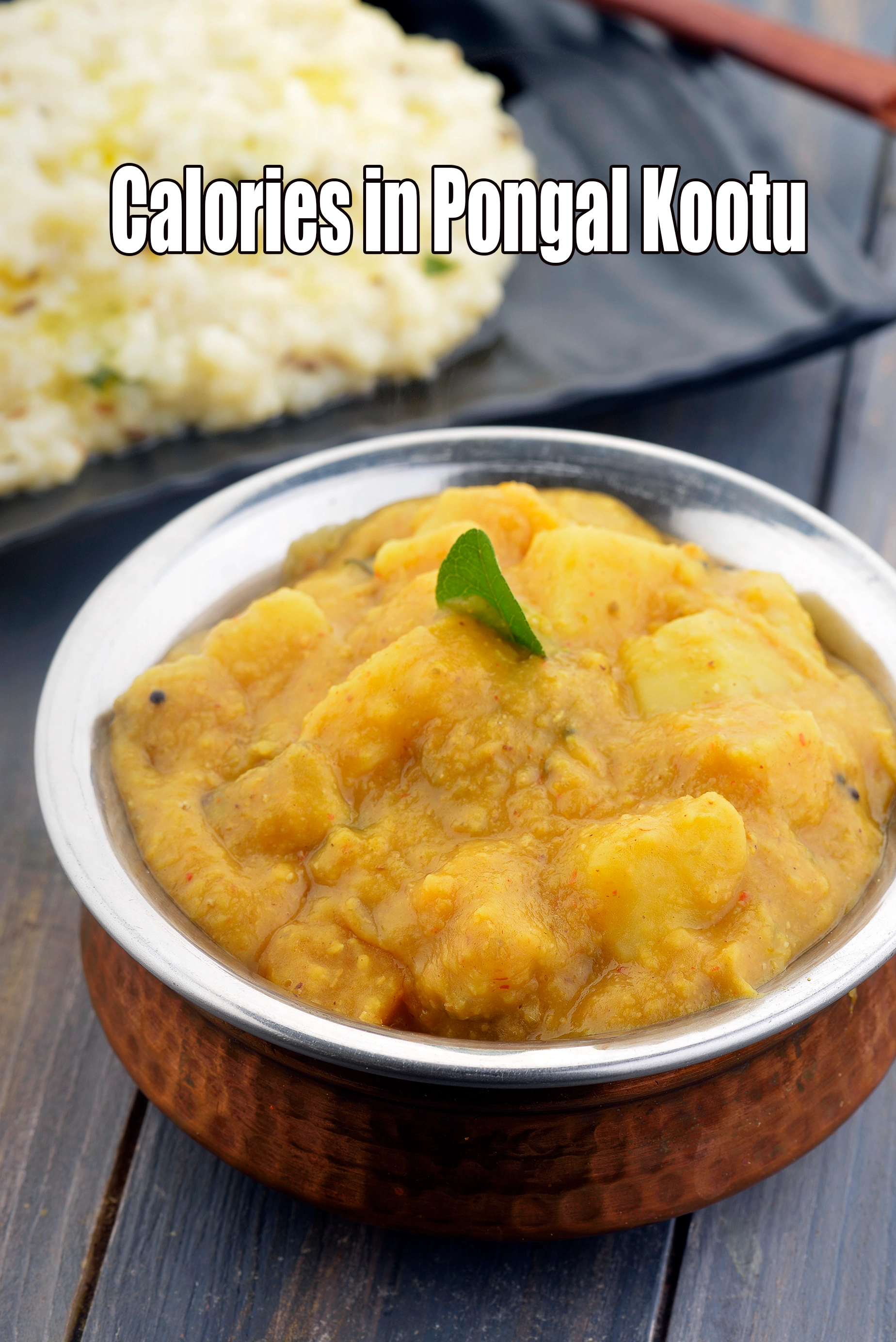
Table of Content

How many calories does one serving of Pongal Kootu have?
One serving of Pongal Kootu gives 52 calories. Out of which carbohydrates comprise 27 calories, proteins account for 7 calories and remaining calories come from fat which is 18 calories. One serving of Pongal Kootu provides about 3 percent of the total daily calorie requirement of a standard adult diet of 2,000 calories.
See Pongal Kootu recipe | South Indian Mixed Vegetable Curry | Tamil Nadu Kootu Curry | Traditional Pongal Kootu |
Pongal Kootu is a traditional South Indian delicacy prepared especially during Makar Sankranti and Pongal festivals. It brings together a hearty mix of seasonal vegetables such as red pumpkin, raw banana, and yam, combined with protein-rich toovar dal, making it a wholesome and comforting curry. The unique blend of vegetables and lentils gives the dish a satisfying texture and deep flavour, making it a festive favourite across Tamil Nadu.
Is Pongal Kootu healthy?
Nutritionally, Pongal Kootu offers a good balance of fiber, vitamins, minerals, and plant protein, thanks to vegetables like pumpkin and the use of toovar dal. The homemade spice paste made from coriander seeds, chana dal, urad dal, and coconut adds flavour without relying heavily on oil. The inclusion of mustard seeds and curry leaves provides antioxidant and gut-friendly benefits. However, the use of coconut and coconut oil increases saturated fat content.
Is Pongal Kootu good for diabetes, heart and weight loss ?
For diabetics, Pongal Kootu can be moderately suitable because pumpkin, suran, and raw banana have a higher glycemic load, while dal provides protein and fiber. Tamarind helps balance glucose impact, but the overall portion size needs to be controlled. Reducing coconut and adding additional low-glycemic vegetables like gourds can help improve suitability for diabetic meals.
For individuals with heart concerns, the recipe is largely wholesome due to its use of legumes, vegetables, and traditional spices. However, ingredients like coconut milk, coconut oil, and coconut-based paste add saturated fats, which may not be heart-friendly in large amounts. By lowering the coconut quantity and using minimal oil, Pongal Kootu can fit comfortably into a heart-healthy diet while still retaining its characteristic flavour.
For weight loss, Pongal Kootu provides satiety because of the dal and vegetables but is calorie-dense mainly due to coconut and coconut oil. The dish can still be enjoyed as part of a weight-management plan if cooked with less coconut and more vegetables. Pumpkin is low-calorie and beneficial, while suran and raw banana are starchier and should be kept in moderation for those watching calories.
Overall, Pongal Kootu is a flavourful, fiber-rich, and comforting dish that can be healthy with mindful adjustments. The natural blend of spices, dal, and vegetables makes it nutritious, but modifications in fat and starch levels help tailor it for diabetics, heart patients, and those aiming for weight loss. When prepared thoughtfully, it remains a traditional dish that is both satisfying and nourishing.
✅ Ways to Make Pongal Kootu Healthier (Point Form)
General Health
- Reduce coconut in the paste by half.
- Increase low-starch vegetables like bottle gourd, ridge gourd, or cabbage.
For Diabetics
- Reduce raw banana and suran; increase pumpkin and green vegetables.
- Add extra dal or a handful of moong dal for better protein balance.
- Avoid excess tamarind or sweet notes; keep portion sizes small.
For Heart Health
- Use 1/2–1 tsp coconut oil instead of 1 tbsp.
- Add more curry leaves and coriander for antioxidants.
- Replace part of the coconut with roasted chana dal for thickness.
For Weight Loss
- Increase vegetable content to add volume without calories.
- Cut coconut paste by 50% and use more spices for flavour.
- Serve with small portions of brown rice, millet, or eat it as a standalone stew.
How to burn 52 calories that come from Pongal Kootu?
Walking (6 kmph) = 16 mins
Running (11 kmph) = 5 mins
Cycling (30 kmph) = 7 mins
Swimming (2 kmph) = 9 mins
Note: These values are approximate and calorie burning differs in each individual.
| Value serving | % Daily Values | |
| Energy | 52 kcal | 3% |
| Protein | 1.7 g | 3% |
| Carbohydrates | 6.8 g | 2% |
| Fiber | 1.01 g | 3% |
| Fat | 1.99 g | 3% |
| Cholesterol | 0.0 mg | 0% |
| VITAMINS | ||
| Vitamin A | 29.0 mcg | 3% |
| Vitamin B1 (Thiamine) | 0.0 mg | 3% |
| Vitamin B2 (Riboflavin) | 0.0 mg | 1% |
| Vitamin B3 (Niacin) | 0.3 mg | 2% |
| Vitamin C | 0.7 mg | 1% |
| Vitamin E | -0.3 mg | -3% |
| Folic Acid (Vitamin B9) | 8.1 mcg | 3% |
| MINERALS | ||
| Calcium | 8.1 mg | 1% |
| Iron | 0.3 mg | 2% |
| Magnesium | 0.0 mg | 0% |
| Phosphorus | 0.0 mg | 0% |
| Sodium | 5.2 mg | 0% |
| Potassium | 93.4 mg | 3% |
| Zinc | 0.1 mg | 1% |
Percent Daily Values are based on a 2000 calorie diet. Your daily values may be higher or lower depending on your calorie needs.
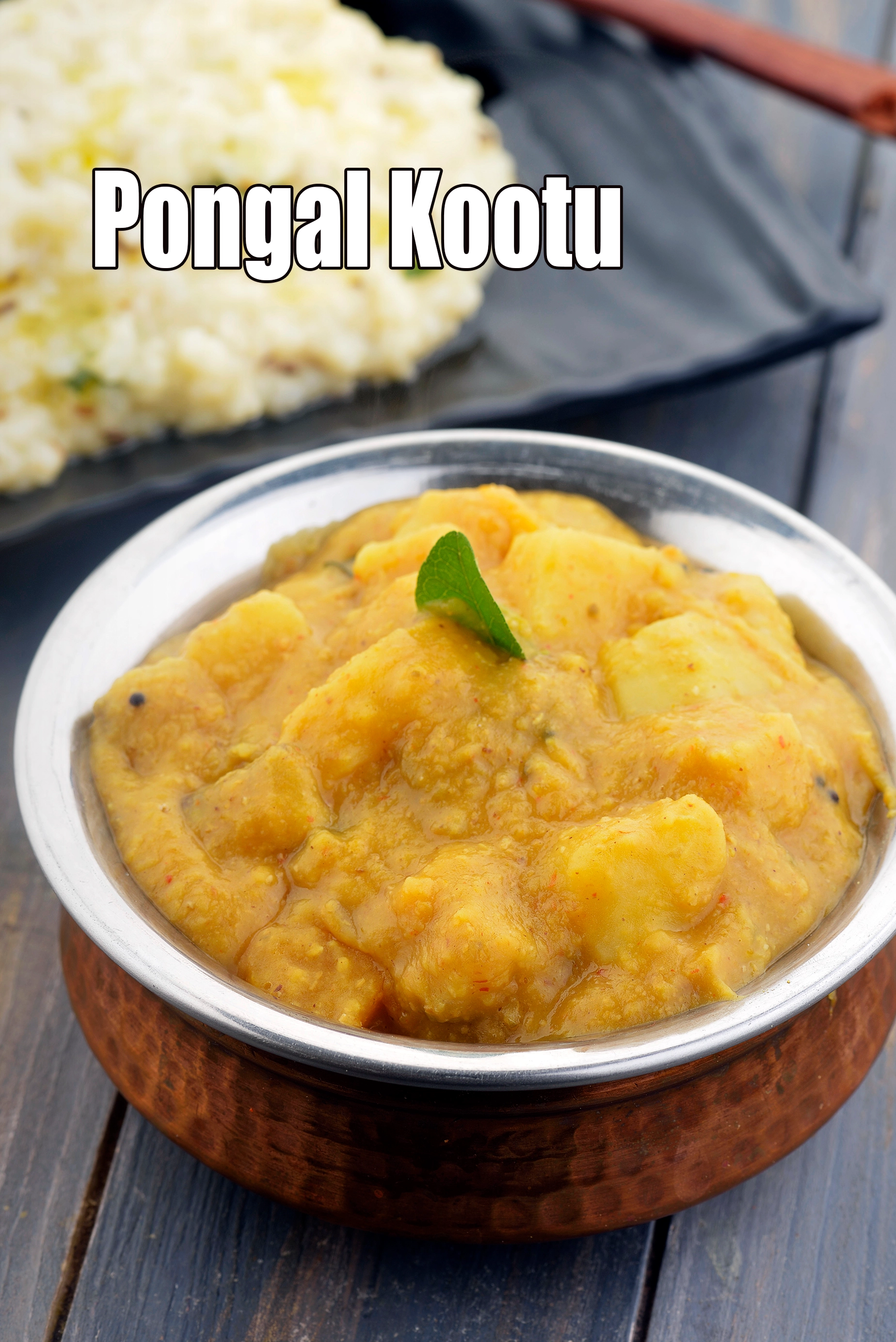
Click here to view Pongal Kootu, South Indian Mixed Vegetable Curry
Calories in other related recipes