Calories in Gongura Pulihora Recipe (Andhra Style Pulao)
This calorie page has been viewed 9815 times
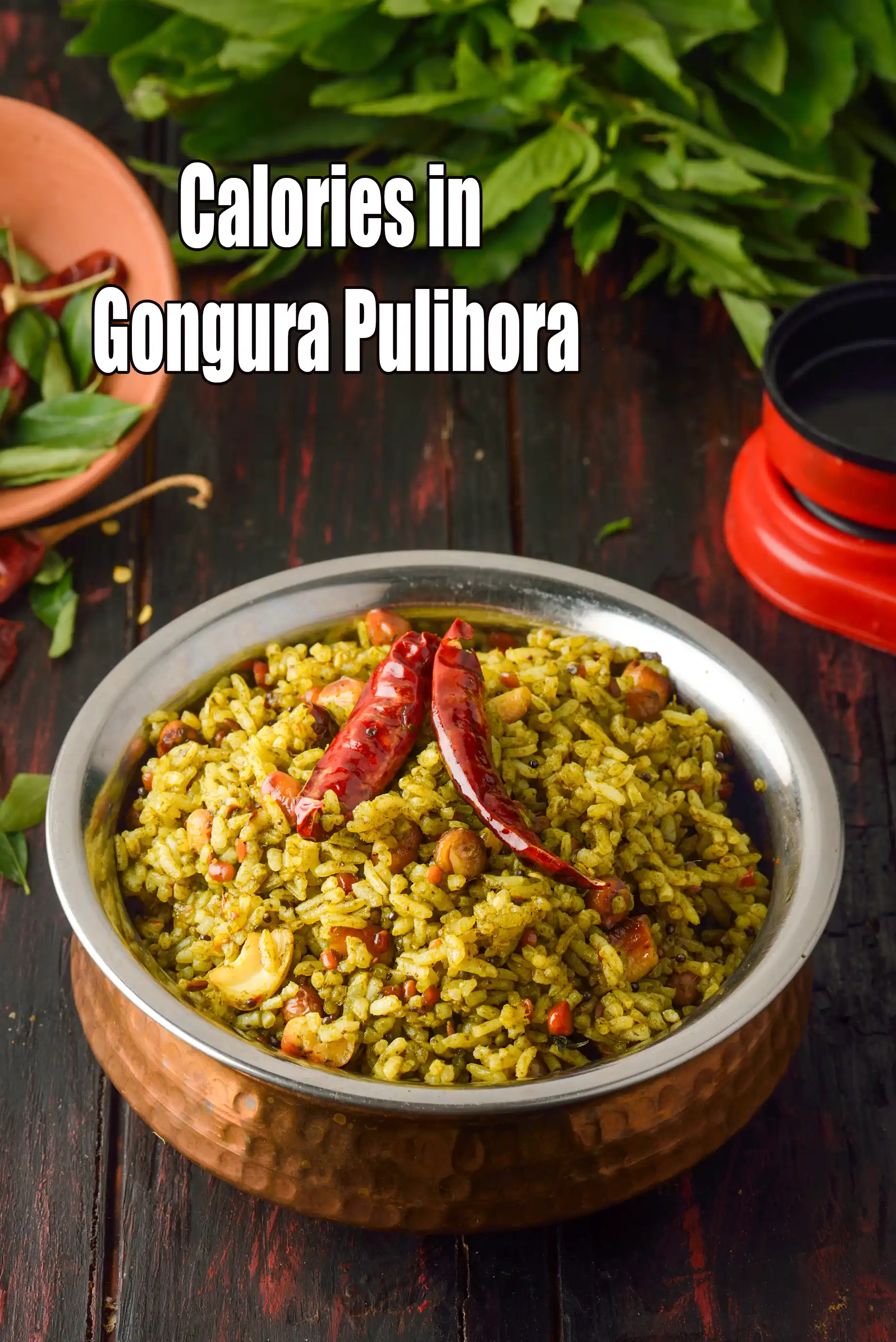
Table of Content

Calories in Gongura Pulihora
Gongura Pulihora Recipe | Andhra Style Pulao | Ambada Pulihora |
The Gongura Pulihora Recipe is a traditional Andhra delicacy known for its bold, tangy, and spicy flavour profile. Made using gongura leaves (ambada), which are naturally sour and aromatic, this pulao stands out as a unique South Indian rice dish that is both comforting and vibrant. The cooked rice absorbs the rich gongura paste, creating a pulao with deep flavours and a refreshing tang. This dish captures the essence of Andhra cuisine, where sourness and spice come together beautifully.
Is Gongura Pulihora healthy ?
From a nutritional standpoint, Gongura Pulihora can be moderately healthy, especially because gongura leaves offer excellent benefits such as improved digestion, immunity, and iron intake. However, the recipe uses a generous amount of rice, oil, peanuts, and cashews, which increase calories and fat. Eating it occasionally as part of a balanced diet is fine, but it may not be ideal for those watching their carbohydrate or fat intake unless modified.
Is Gongura Pulihora good for diabetes, heart and weight loss ?
For diabetes, Gongura Pulihora is not the best choice in its original form because it contains a high amount of white rice, which raises blood sugar quickly. However, if prepared with brown rice, millet rice (like foxtail or little millet), or smaller portions, it can be made safer. The gongura paste is diabetes-friendly because it is low in carbs and high in fibre. Moderate oil and fewer nuts make it more suitable.
For heart health, the dish can be appropriate when prepared with reduced oil and fewer cashews/peanuts. Gongura leaves help reduce inflammation, while dals offer plant protein. Using heart-friendly oils like cold-pressed groundnut or sesame oil in limited quantity keeps the dish healthy. Avoiding excess salt also helps manage blood pressure.
For weight loss, Gongura Pulihora is best eaten in a controlled portion or modified to reduce calories. Using more gongura paste and fewer carbs, replacing rice with millets or mixing half rice with half cauliflower rice, and reducing oil can make it a lighter meal suitable for weight management.
Ways to Make Gongura Pulihora Healthier
(✔️ Easy practical improvements)
- Replace white rice with brown rice, little millet, or foxtail millet.
- Reduce oil from 3 tbsp to 1–1.5 tbsp.
- Cut peanuts and cashews by half or skip cashews entirely.
- Add more gongura paste to increase fibre and reduce carb density.
- Add boiled tur dal or moong dal for extra protein.
- Limit salt for heart and blood pressure health.
- Serve with curd, which improves digestion and keeps the meal lighter.
- Use garlic in moderation for added heart benefits.
| Value serving | % Daily Values | |
| Energy | 317 kcal | 16% |
| Protein | 7.2 g | 12% |
| Carbohydrates | 32.1 g | 12% |
| Fiber | 1.80 g | 6% |
| Fat | 18.13 g | 30% |
| Cholesterol | 0.0 mg | 0% |
| VITAMINS | ||
| Vitamin A | 1199.8 mcg | 120% |
| Vitamin B1 (Thiamine) | 0.2 mg | 11% |
| Vitamin B2 (Riboflavin) | 0.2 mg | 10% |
| Vitamin B3 (Niacin) | 2.2 mg | 16% |
| Vitamin C | 7.7 mg | 10% |
| Vitamin E | 0.7 mg | 10% |
| Folic Acid (Vitamin B9) | 35.7 mcg | 12% |
| MINERALS | ||
| Calcium | 84.3 mg | 8% |
| Iron | 2.0 mg | 11% |
| Magnesium | 87.4 mg | 20% |
| Phosphorus | 135.2 mg | 14% |
| Sodium | 8.0 mg | 0% |
| Potassium | 160.8 mg | 5% |
| Zinc | 1.0 mg | 6% |
Percent Daily Values are based on a 2000 calorie diet. Your daily values may be higher or lower depending on your calorie needs.
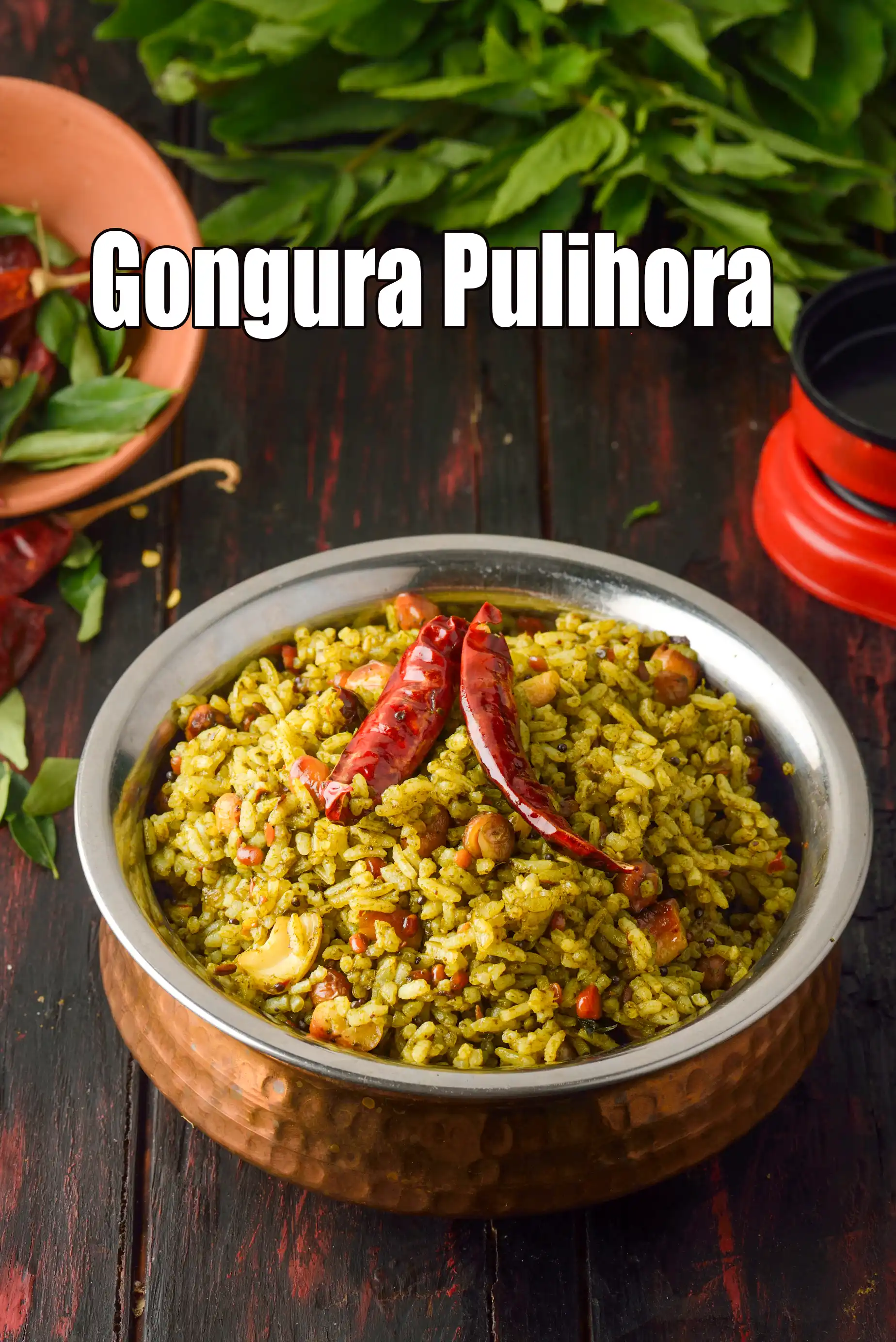
Click here to view Gongura Pulihora Recipe, Andhra Style Pulao


-9797.jpg?w=400&format=webp)
-15513.jpg?w=400&format=webp)