Calories in Bhaji Pulao Recipe (Layered Pav Bhaji Pulao)
This calorie page has been viewed 3316 times
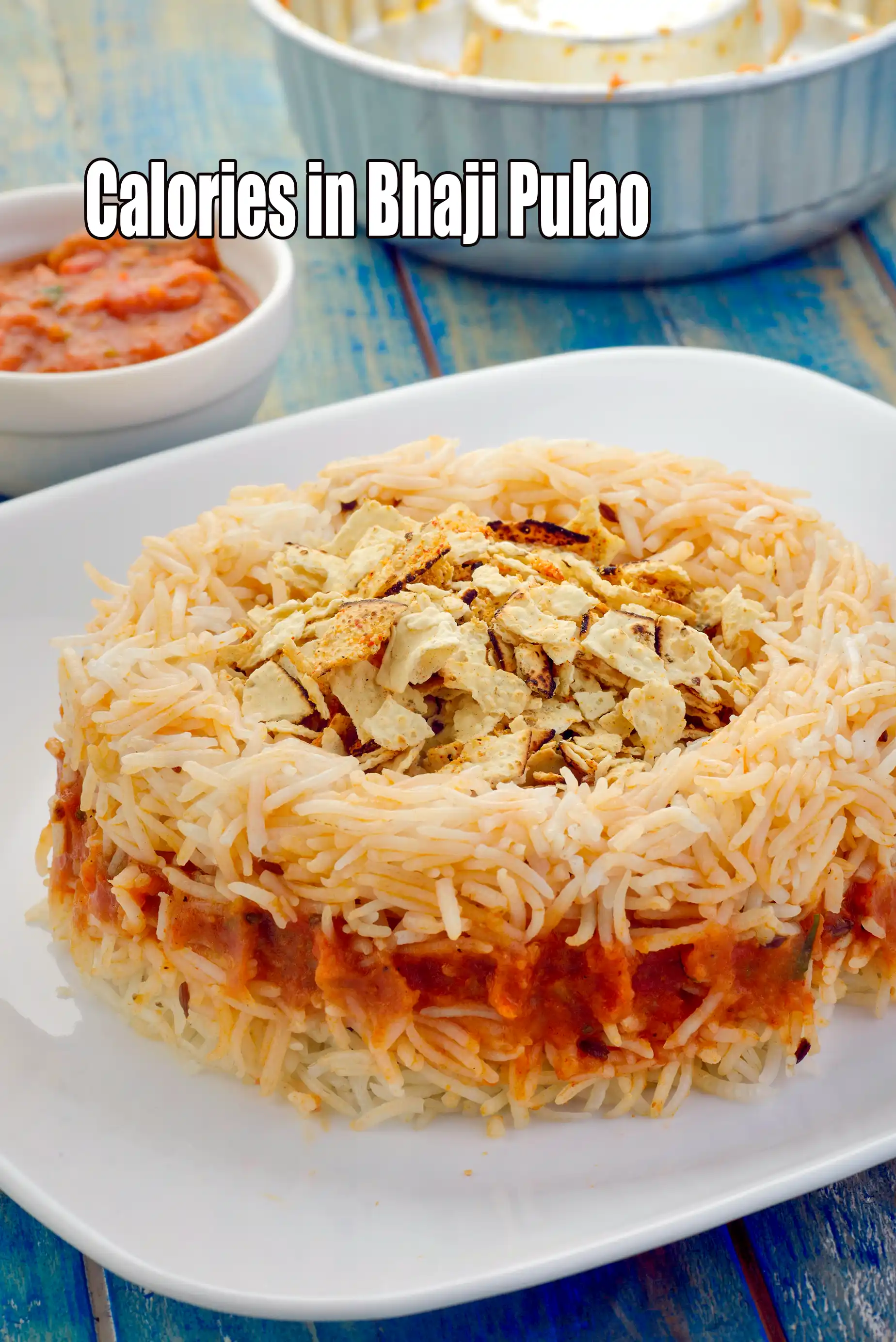
Table of Content

Calories in Bhaji Pulao
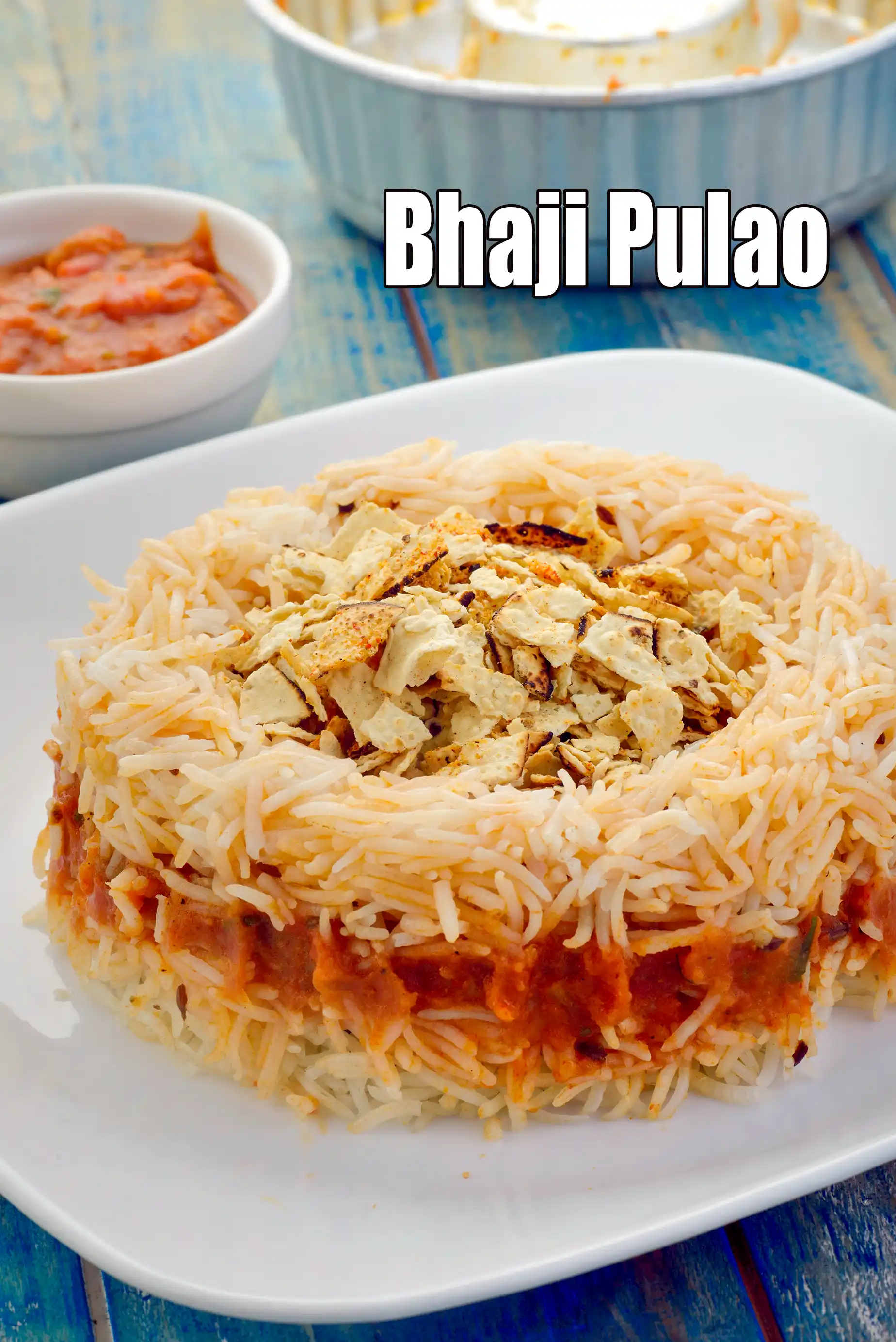
Bhaji Pulao | Layered Pav Bhaji Pulao | Leftover Bhaji Rice Layer |
The Bhaji Pulao is a delightful fusion dish that transforms simple ingredients into a vibrant, flavorful one-dish meal. It begins with fragrant spiced rice, prepared by sautéing cumin seeds, cloves, cinnamon, and bay leaf in ghee before mixing in soft, cooked rice. This aromatic base sets the tone for a pulao that is comforting yet exciting, making it a great way to elevate everyday meals. A touch of salt balances the warmth of the whole spices, creating a subtly seasoned rice perfect for layering.
Is Bhaji Pulao healthy overall
Bhaji Pulao, made with rice, ghee, whole spices, and leftover bhaji, can be moderately healthy when eaten in controlled portions. The dish offers carbohydrates for energy, fiber from the vegetables in the bhaji, and antioxidants from spices like cumin and cinnamon. However, the traditional recipe uses ghee, refined rice, and the added churi papad, which increases calories, saturated fat, and salt. So, while tasty and comforting, it is only semi-healthy unless modified.
Is Bhaji Pulao good for diabetes
For diabetes, Bhaji Pulao is not ideal in its original form because it uses white rice, which has a high glycemic indexand can spike sugar levels. The ghee and papad add extra calories without lowering the carb load. However, when adapted with brown rice, millets, or cauliflower rice, reduced ghee, and plenty of vegetable bhaji, the dish can be made much more diabetes-friendly.
Is Bhaji Pulao good for heart health
For heart health, the concern is the saturated fat from ghee and the high sodium from papad. White rice also offers limited fiber. But the spices—especially cinnamon, cumin, and bay leaf—have mild heart-friendly properties. If cooked with less ghee, low-salt papad, and high-fiber grains, Bhaji Pulao becomes safer for people with heart concerns.
Is Bhaji Pulao good for weight loss
In its original form, Bhaji Pulao is not ideal for weight loss because of white rice + ghee + papad, which pushes the calorie count high. It also lacks protein. However, with simple swaps such as brown rice, more vegetables, less ghee, and adding paneer / tofu / sprouts, the pulao becomes more filling, lower-GI, and nutrient-dense, making it suitable for a weight-loss meal.
How to make Bhaji Pulao healthier (point form)
To reduce calories & fat:
- Use 1/2–1 tsp ghee instead of 2 tsp, or replace partly with olive oil.
- Roast the papad without ghee or skip the churi papad entirely.
For diabetes & weight loss:
- Replace white rice with brown rice, red rice, quinoa, or millets (foxtail/little millet).
- Increase the amount of vegetable bhaji to boost fiber and reduce the rice-to-veggie ratio.
- Add protein (paneer, tofu, cooked dal, sprouts).
For heart health:
- Reduce salt in bhaji and rice; use low-salt papad if needed.
- Use less ghee and more healthy fats in small amounts.
General improvements:
- Add veggies like capsicum, peas, carrots, beans, spinach to increase nutrients.
- Serve with curd or raita for a balanced meal that slows carb absorption.
Summary
Bhaji Pulao is tasty and satisfying, but its healthiness depends on the ingredients you choose. In the standard recipe, it is moderately healthy but not ideal for diabetes, heart health, or weight loss. With grain swaps, reduced ghee, more vegetables, lower salt, and optional protein additions, it can easily be transformed into a nutrient-rich, balanced, and healthier version suitable for most dietary needs.
| Value serving | % Daily Values | |
| Energy | 241 kcal | 12% |
| Protein | 3.4 g | 6% |
| Carbohydrates | 28.0 g | 10% |
| Fiber | 2.02 g | 7% |
| Fat | 12.85 g | 21% |
| Cholesterol | 11.3 mg | 4% |
| VITAMINS | ||
| Vitamin A | 333.5 mcg | 33% |
| Vitamin B1 (Thiamine) | 0.1 mg | 6% |
| Vitamin B2 (Riboflavin) | 0.0 mg | 2% |
| Vitamin B3 (Niacin) | 0.8 mg | 6% |
| Vitamin C | 16.2 mg | 20% |
| Vitamin E | -1.0 mg | -13% |
| Folic Acid (Vitamin B9) | 10.2 mcg | 3% |
| MINERALS | ||
| Calcium | 20.9 mg | 2% |
| Iron | 0.7 mg | 4% |
| Magnesium | 0.0 mg | 0% |
| Phosphorus | 0.0 mg | 0% |
| Sodium | 45.8 mg | 2% |
| Potassium | 84.2 mg | 2% |
| Zinc | 0.4 mg | 2% |
Percent Daily Values are based on a 2000 calorie diet. Your daily values may be higher or lower depending on your calorie needs.
Click here to view Bhaji Pulao, Layered Pav Bhaji Pulao