Ker Sangri Recipe (Rajasthani Ker Sangri Sabzi)
 Tarla Dalal
• Updated : Oct 24, 2025
Tarla Dalal
• Updated : Oct 24, 2025


Table of Content
About Ker Sangri

|
|
Ingredients
|
|
Methods
|
|
Like ker sangri
|
|
What is ker sangri made of ?
|
|
Soaking ker
|
|
Soaking sangri
|
|
Cooking ker and sangri
|
|
Making ker sangri
|
|
Pro tips for ker sangri
|
|
Nutrient values
|
ker sangri recipe | Rajasthani ker sangri sabzi | traditional ker sangri | with 40 amazing images.
ker sangri is a traditional Rajasthani sukha dish. Learn to make Rajasthani ker sangri sabzi.
A delightful bean and berry combo unique to Rajasthan, ker sangri is a traditional, spicy sabzi made with the ker berry and the sangri bean.
Cooked simply and easily with common ingredients like red chillies, carom seeds and a couple of spice powders. ker sangri is nevertheless extremely tasty, leaving a lingering taste on your tongue.
The addition of raisins brings out the brilliance of this ker sangri recipe, as it enhances the flavour of all the spicy ingredients while also providing sweet respites in every spoonful.
In Rajasthani homes, ker and sangri are often used to make a ker sangri sabzi.
To make ker sangri, normally any vegetable oil is used but we made it with coconut oil which is a much healthier alternative or use ghee.
ker sangri can be served with bajra roti, phulka or chawal.
Enjoy ker sangri recipe | Rajasthani ker sangri sabzi | traditional ker sangri | with step by step photos.
Ker Sangri recipe - How to make Ker Sangri
Tags
Soaking Time
0
Preparation Time
10 Mins
Cooking Time
15 Mins
Baking Time
0 Mins
Baking Temperature
0
Sprouting Time
0
Total Time
25 Mins
Makes
4 servings
Ingredients
For Ker Sangri
- 1/4 cup ker
- 1 cup sangri (sanger)
- salt to taste
- 2 tbsp oil
- 1/2 tsp carom seeds (ajwain)
- 1/4 tsp asafoetida (hing)
- 2 whole dry Kashmiri red chilli , broken into pieces
- 1/2 tsp turmeric powder (haldi)
- 2 tsp chilli powder
- 1 tbsp coriander (dhania) powder
- 1 tsp dried mango powder (amchur)
- 1 tbsp raisins (kismis)
- 1 tbsp curd (dahi)
Method
for ker sangr
- To make ker sangri sabzi, clean and soak the ker and sangri separately for 8 hours or overnight.
- Drain and wash again till clean.
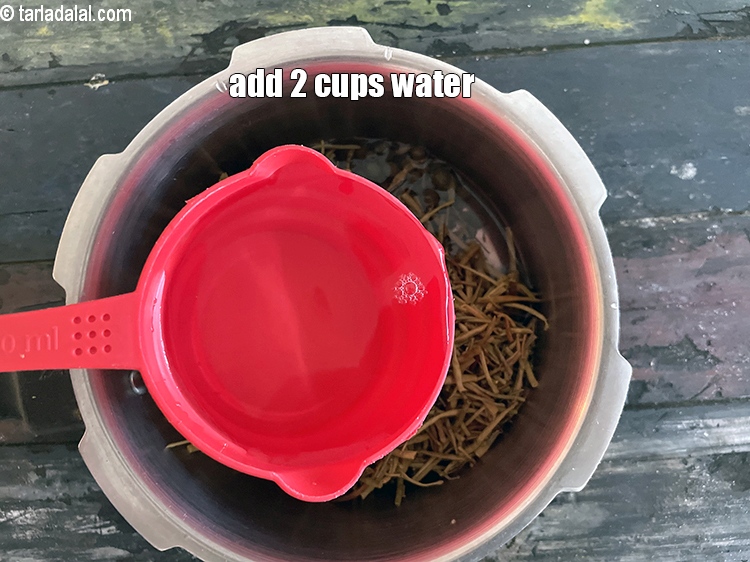
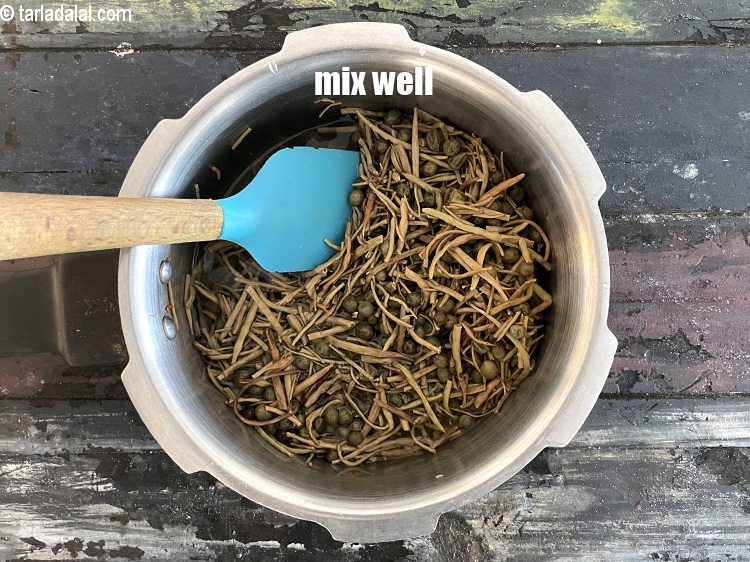
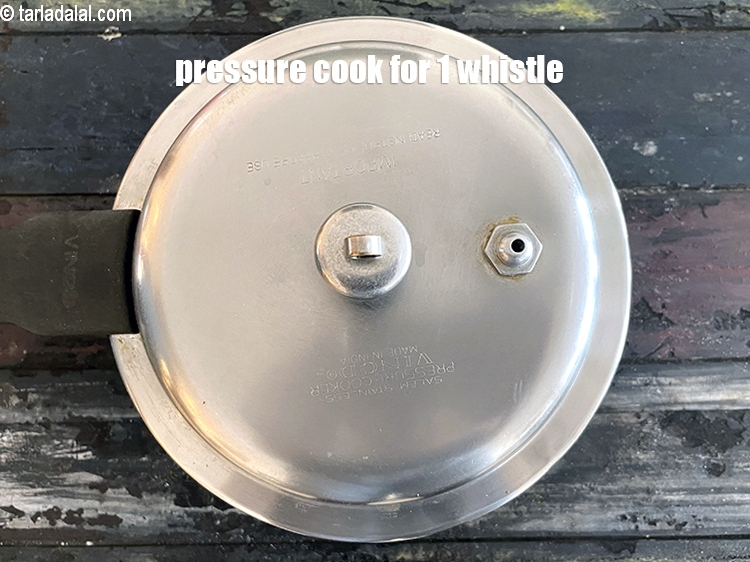
- Combine the ker, sangri and salt along with 2 cups of water in a pressure cooker, mix well and pressure cook for 1 whistle.
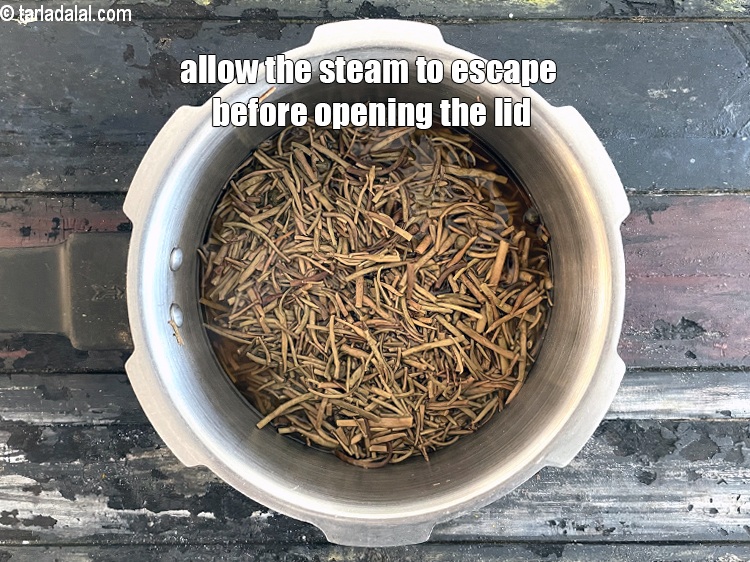
- Allow the steam to escape before opening the lid. Drain the water and keep aside.
- Heat the oil in a broad non-stick pan, add the carom seeds, asafoetida and red chillies and sauté on a medium flame for 30 seconds.
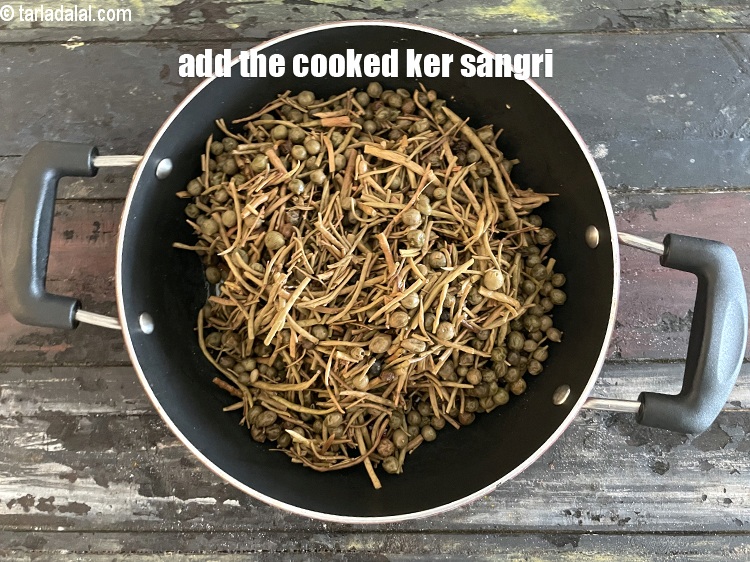
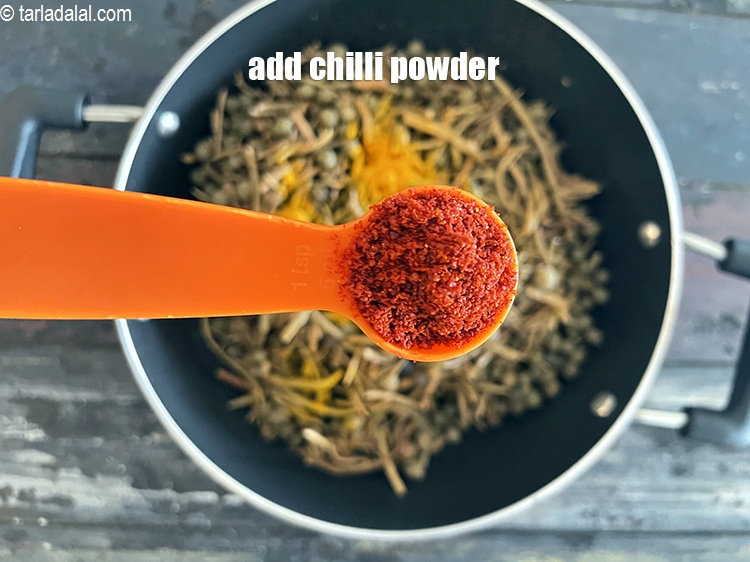
- Add the cooked ker-sangri, turmeric powder, chilli powder, coriander powder, dried mango powder, raisins, dahi and a little salt, mix well.
- Cook on a medium flame for 2 to 3 minutes, while stirring occasionally.
- Serve ker sangri sabzi immediately.
Ker Sangri recipe with step by step photos
-
-
like ker sangri recipe | Rajasthani ker sangri sabzi | traditional ker sangri | then see our Rajasthani sabzi recipes and some recipes we love below.
- gavarfali ki sabzi recipe | Rajasthani gavar sabji | healthy gavar sabzi with curds | cluster beans curry |
- gatte ki sabzi recipe | Rajasthani gatte ki sabji | gatta curry | besan ke gatte ki sabzi recipe |
-
like ker sangri recipe | Rajasthani ker sangri sabzi | traditional ker sangri | then see our Rajasthani sabzi recipes and some recipes we love below.
-
-
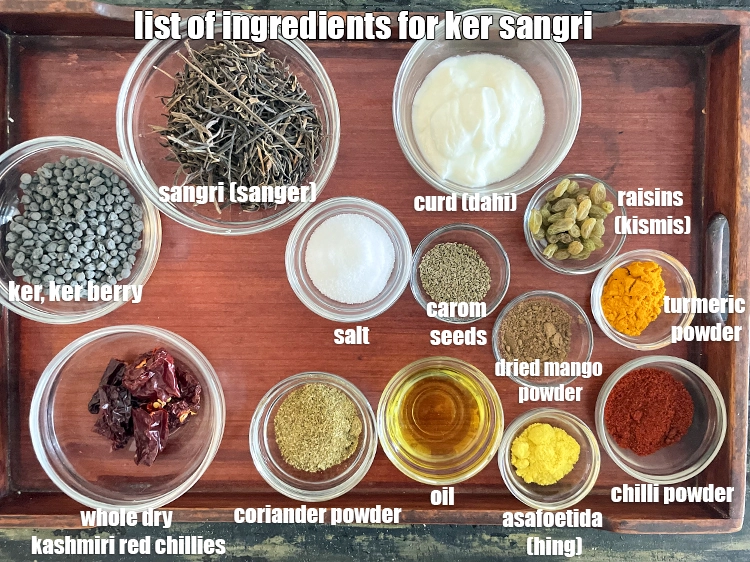
what is ker sangri made of ? See below image of list of ingredients for ker sangri.
-
-
-
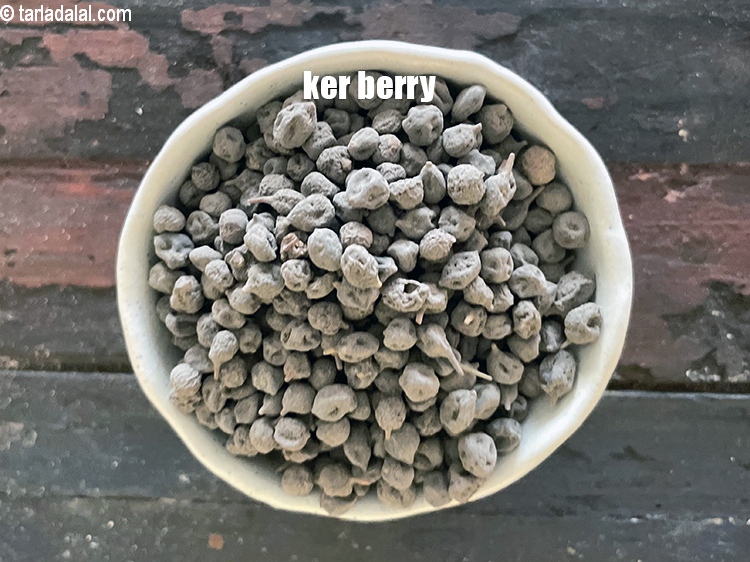
Ker berry : Ker is a green berry like fruit of a thorny bush(capparis decidua) found in the arid parts of Rajastnan.It is very sour, and is commonly available during the months of April and May. Ker is a small moderate sized evergreen thorny tree, with slender branches armed with conical thorns and with light bluish-green foliage.
-
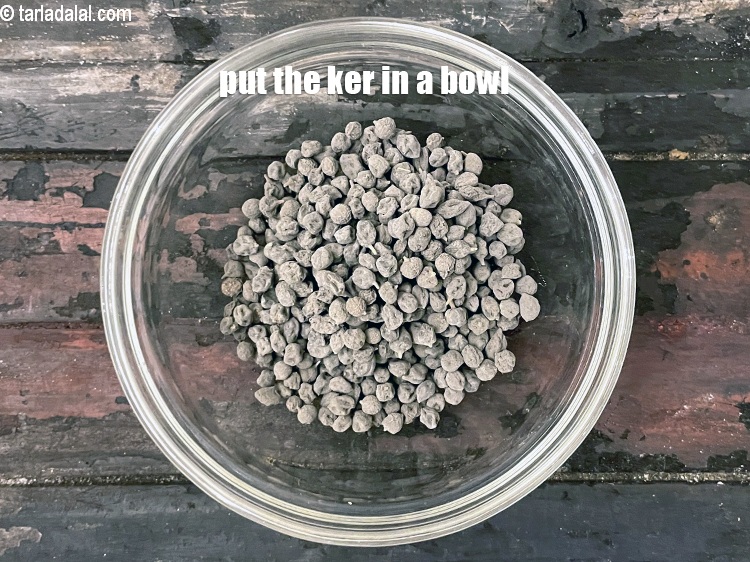
Put 1/4th cup ker berries in a bowl.
-
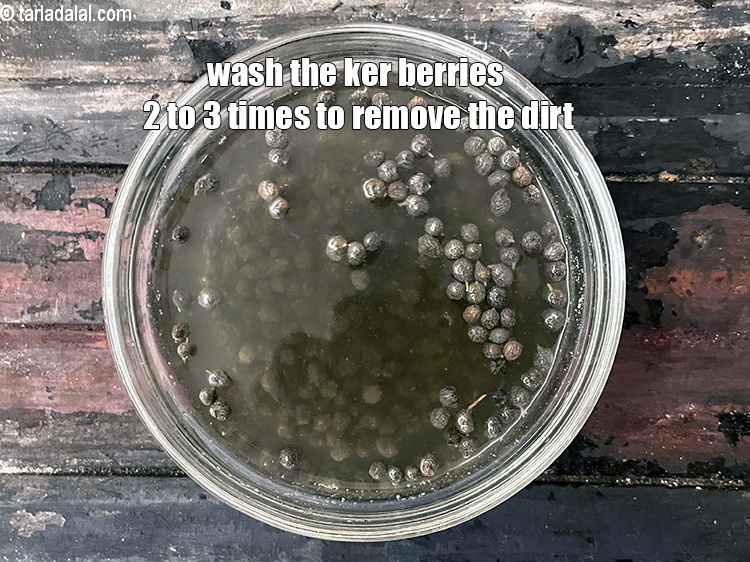
Wash ker berries 2 to 3 times to remove all the dirt. You can see the dirt.
-
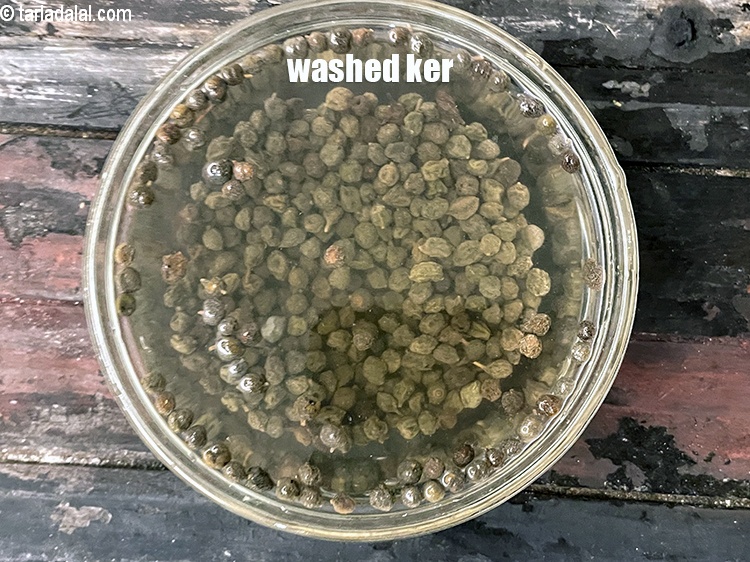
Washed ker berries.
-
Cover and soak ker berries for 8 hours or overnight.
-
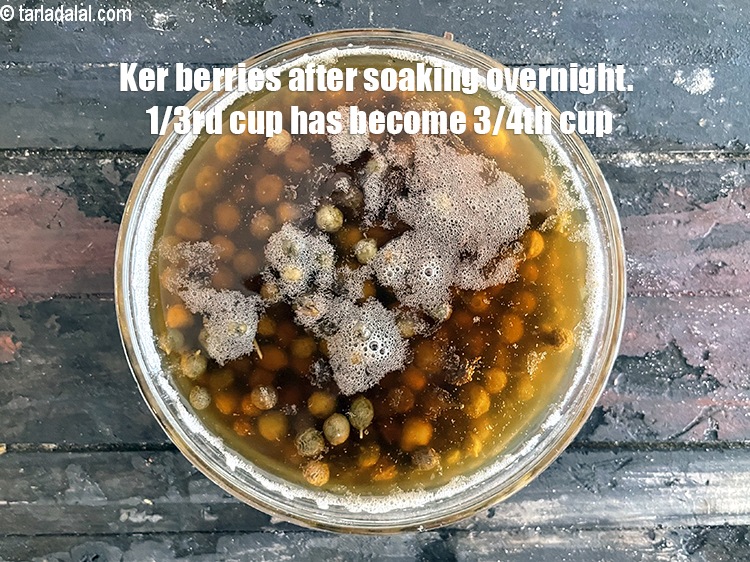
Berries after soaking. We soaked 1/3rd cup ker which has now become 3/4th cup. Note that we now need to wash this 2 to 3 times.
-
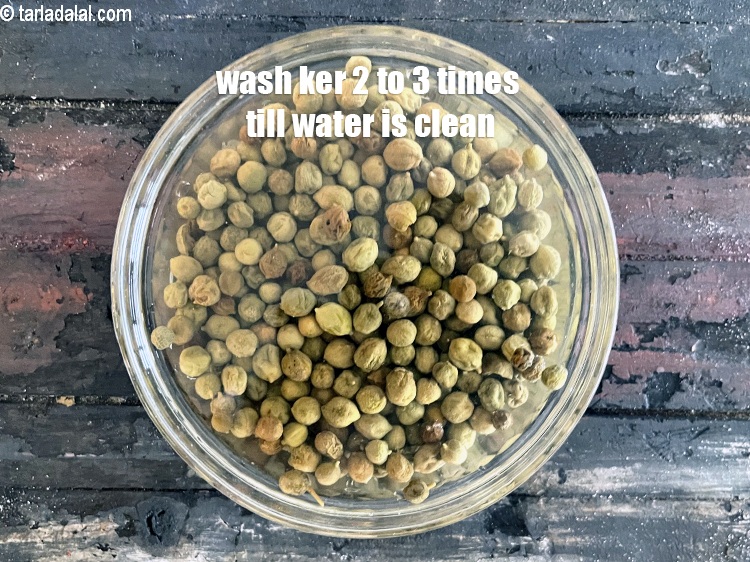
Wash the ker berries 2 to 3 times in water till clean.
-
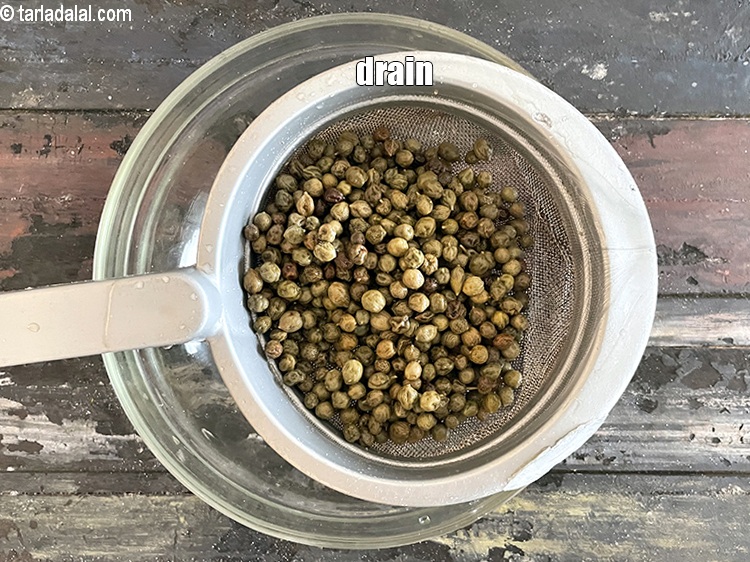
Drain.
-
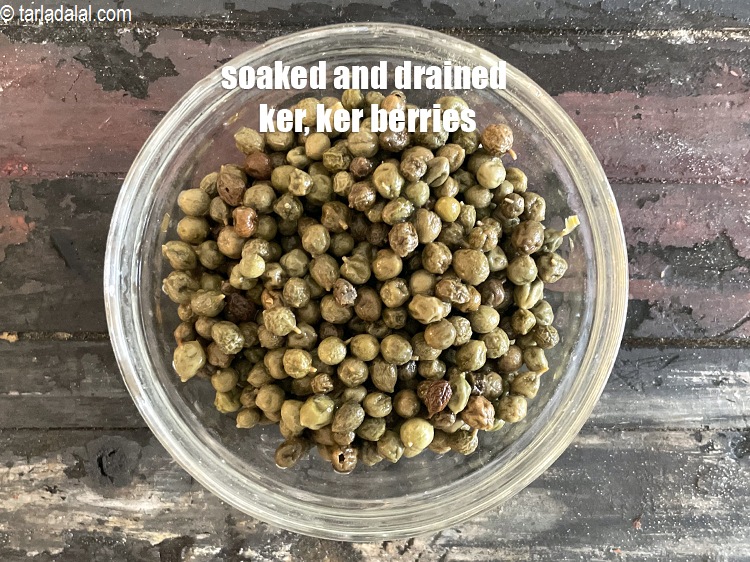
Soaked and drained ker.
-
Ker berry : Ker is a green berry like fruit of a thorny bush(capparis decidua) found in the arid parts of Rajastnan.It is very sour, and is commonly available during the months of April and May. Ker is a small moderate sized evergreen thorny tree, with slender branches armed with conical thorns and with light bluish-green foliage.
-
-
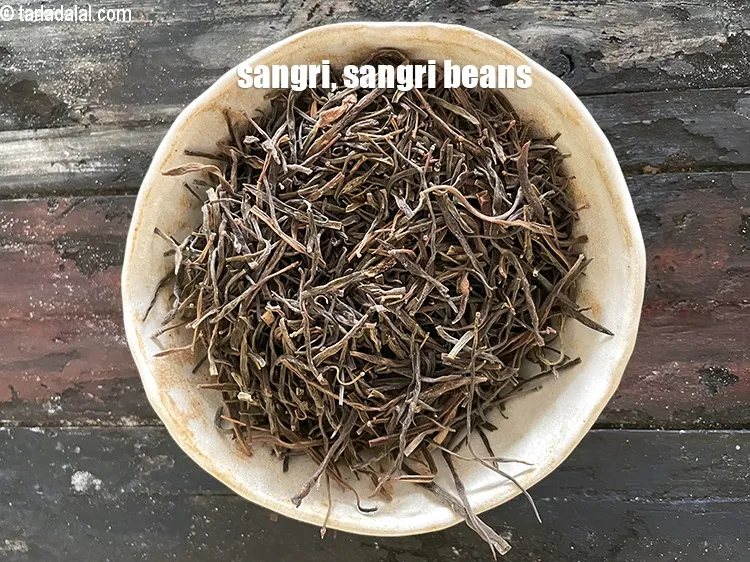
Sangri beans : Sangri or Prosopis cineraria is a small to medium size tree, found mainly in the Thar Desert of Rajasthan in India. Common names include: Ghaf (United Arab Emirates), khejri, jant/janti, sangri (Rajasthan), jand (Punjabi), kandi (Sind), Vanni (Tamil), sami, sumri (Gujarat). Its trade name is kandi. It grows in dry and arid regions of Arabia and in regions of India mainly Rajasthan, Haryana, Punjab, Gujarat, Western Uttar Pradesh and drier parts of Deccan.
-
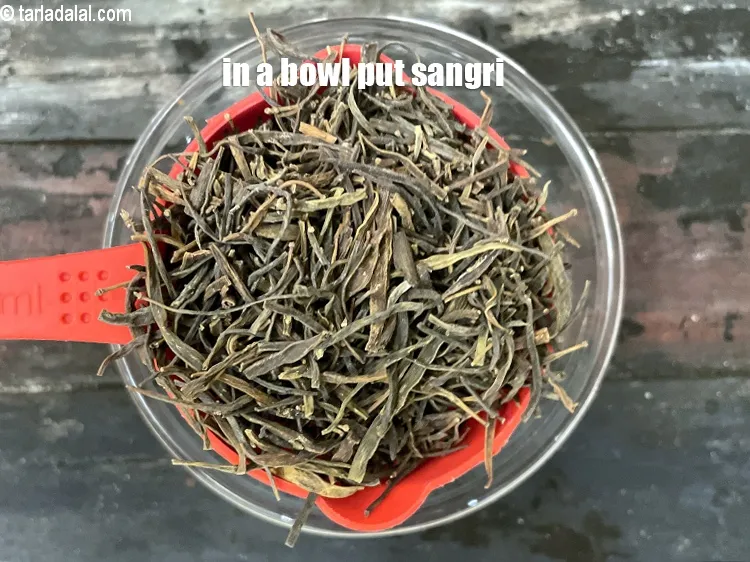
Put 1 cup sangri (sanger) in a bowl.
-
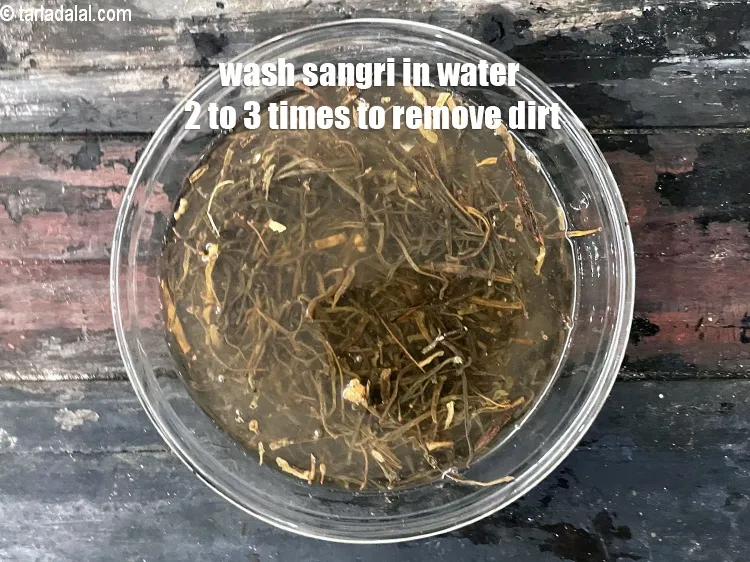
Wash sangri beans in water 2 to 3 times to remove the dirt.
-
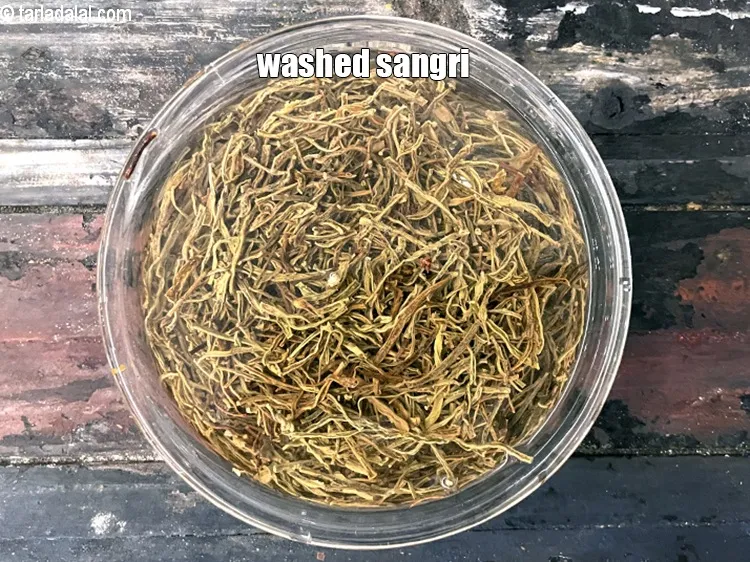
Washed sangri.
-
Cover and soak sangri for 8 hours or overnight.
-
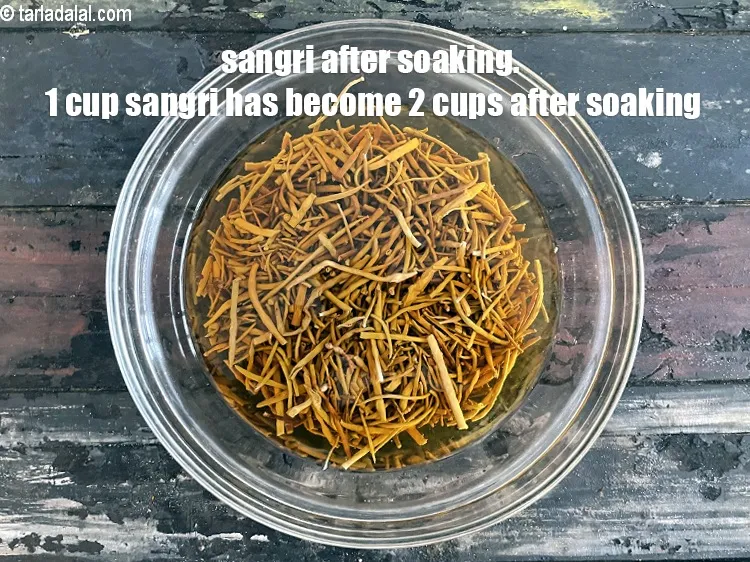
Sangri after soaking. We soaked 1 cup sangri which has now become 2 cups. Note that we now need to wash this 2 to 3 times.
-
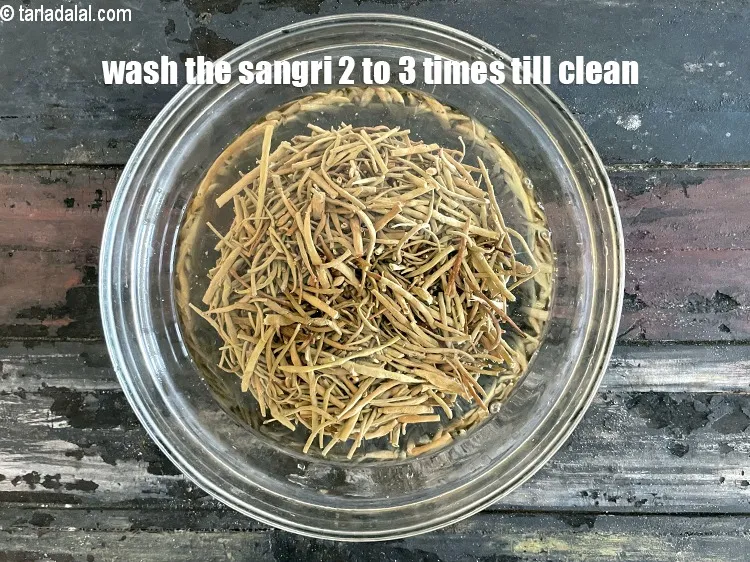
Wash the sangri 2 to 3 times in water till clean.
-
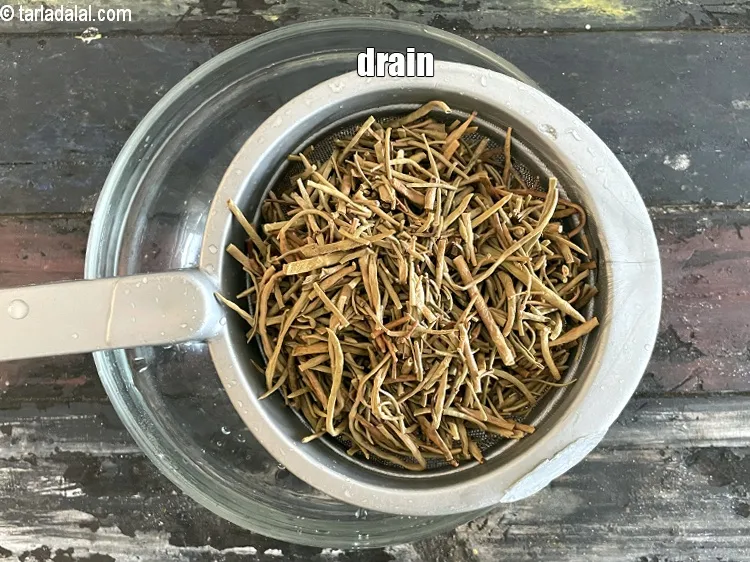
Drain.
-
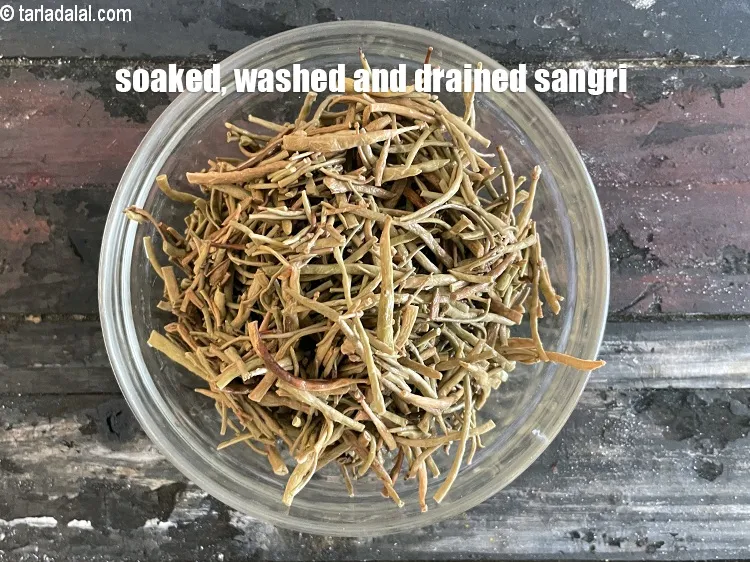
Soaked and drained sangri.
-
Sangri beans : Sangri or Prosopis cineraria is a small to medium size tree, found mainly in the Thar Desert of Rajasthan in India. Common names include: Ghaf (United Arab Emirates), khejri, jant/janti, sangri (Rajasthan), jand (Punjabi), kandi (Sind), Vanni (Tamil), sami, sumri (Gujarat). Its trade name is kandi. It grows in dry and arid regions of Arabia and in regions of India mainly Rajasthan, Haryana, Punjab, Gujarat, Western Uttar Pradesh and drier parts of Deccan.
-
-
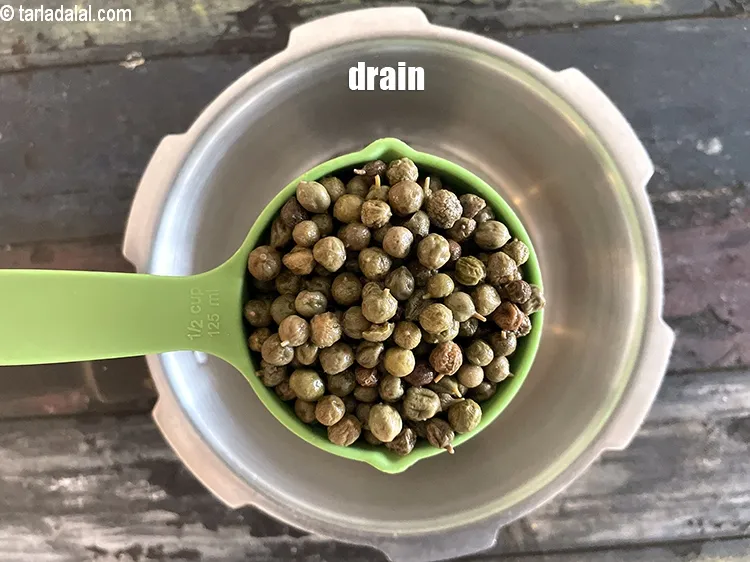
In a pressure cooker put 3/4th cup soaked, washed and drained ker.
-
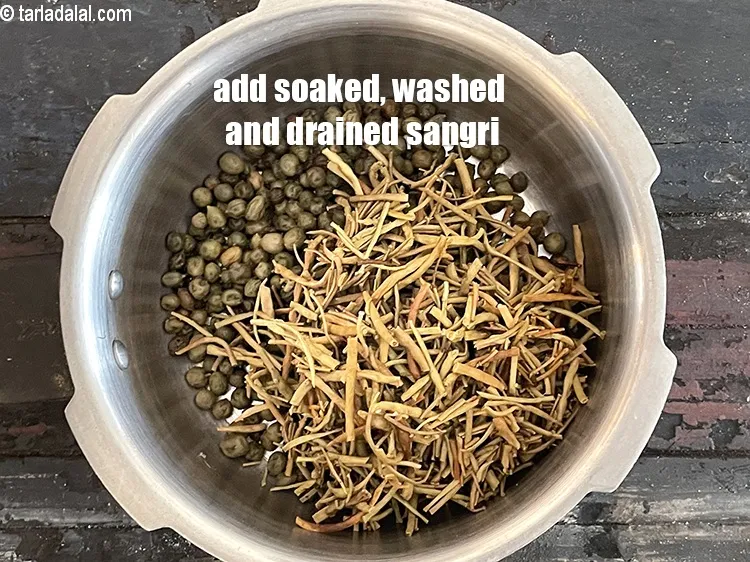
Add 2 cups soaked, washed and drained sangri (sanger). Note that 1 cup sangri becomes 2 cups after soaking.
-
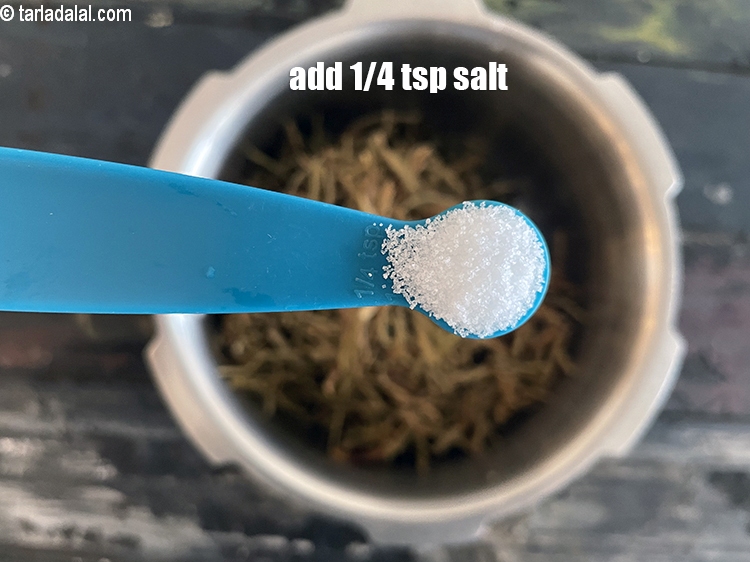
Add salt to taste. We added 1/4 tsp salt.
-
Add 2 cups of water.
-
Mix well.
-
Pressure cook for 1 whistle.
-
Allow the steam to escape before opening the lid.
-
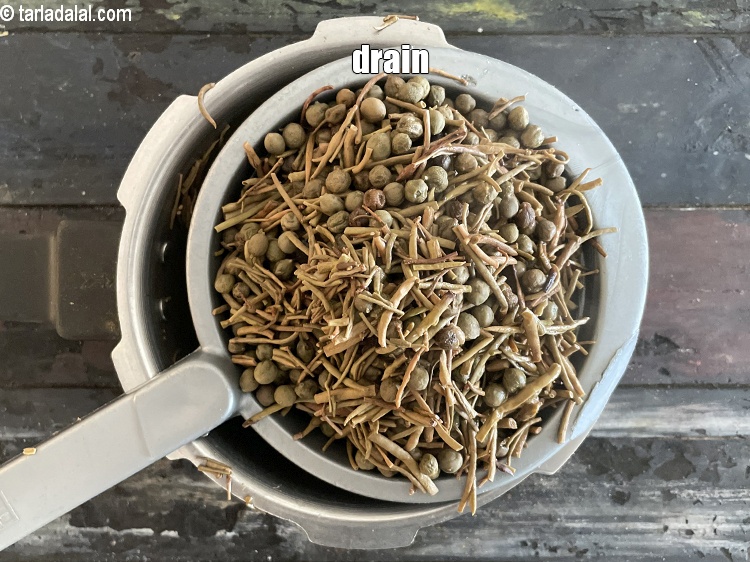
Drain the water.
-
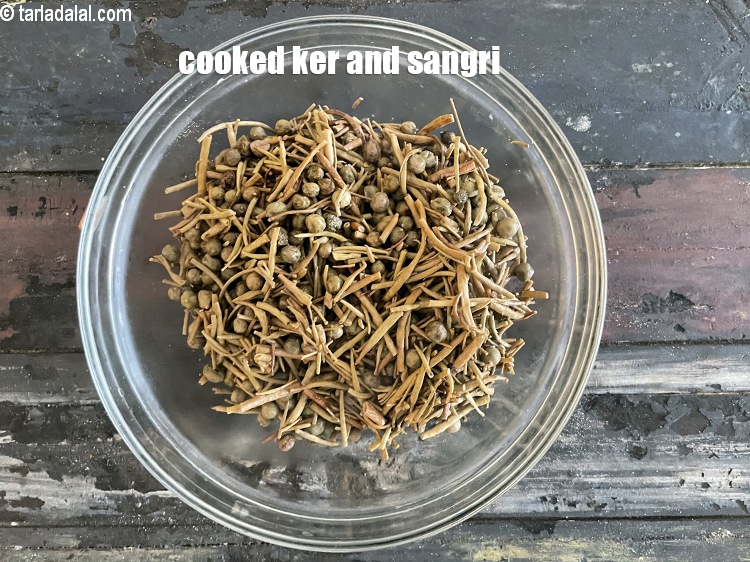
Keep aside. Cooked ker and sangri.
-
In a pressure cooker put 3/4th cup soaked, washed and drained ker.
-
-
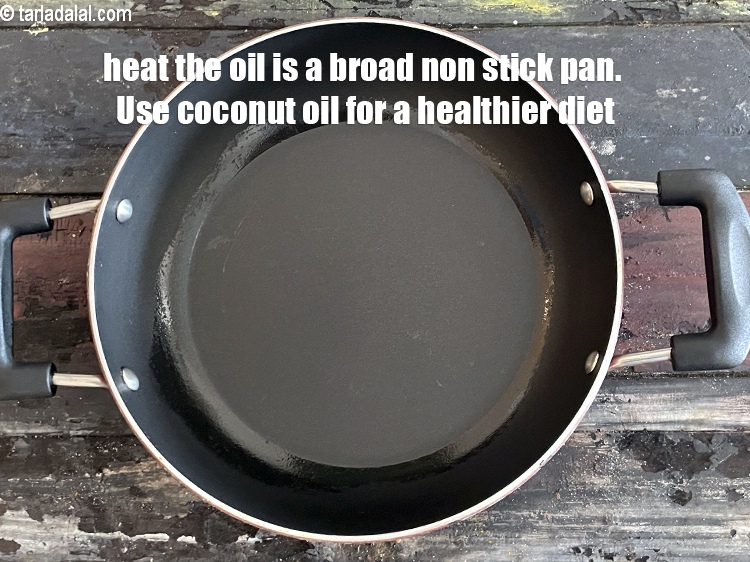
To make ker sangri recipe | Rajasthani ker sangri sabzi | traditional ker sangri | heat 2 tbsp coconut oil or oil in a broad non-stick pan. Use coconut oil for a healthier diet.
-
Add 1/2 tsp carom seeds (ajwain).
-2-200593.webp?w=800&format=webp)
-
Add 1/4 tsp asafoetida (hing).
-3-200593.webp?w=800&format=webp)
-
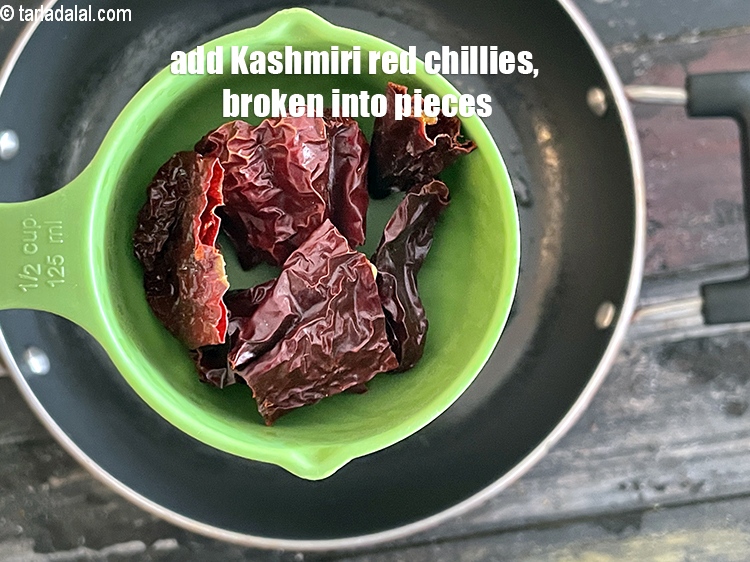
Add 2 whole dry kashmiri red chillies , broken into pieces.
-
Sauté on a medium flame for 30 seconds.

-
Add the cooked ker-sangri.
-
Add 1/2 tsp turmeric powder (haldi).
-7-200593.webp?w=800&format=webp)
-
Add 2 tsp chilli powder.
-
Add 1 tbsp coriander (dhania) powder.
-powder-9-200593.webp?w=800&format=webp)
-
Add 1 tsp dried mango powder (amchur).
-10-200593.webp?w=800&format=webp)
-
Add 1 tablespoon raisins (kismis).
-11-200593.webp?w=800&format=webp)
-
Add 1 tablespoon curds (dahi ).
-12-200593.webp?w=800&format=webp)
-
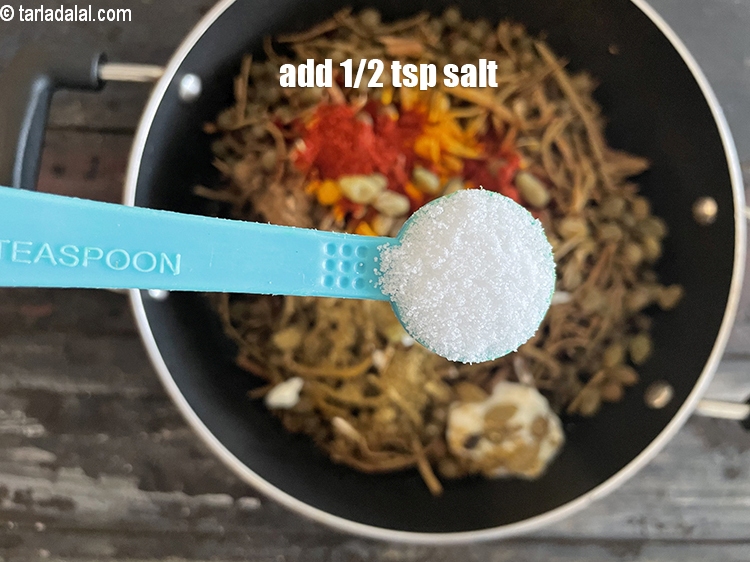
Add salt to taste. We added 1/2 tsp salt.
-
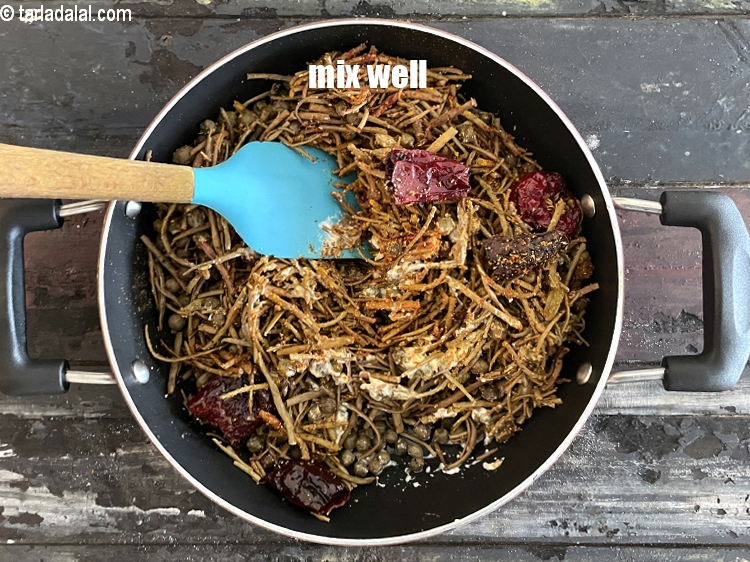
Mix well.
-
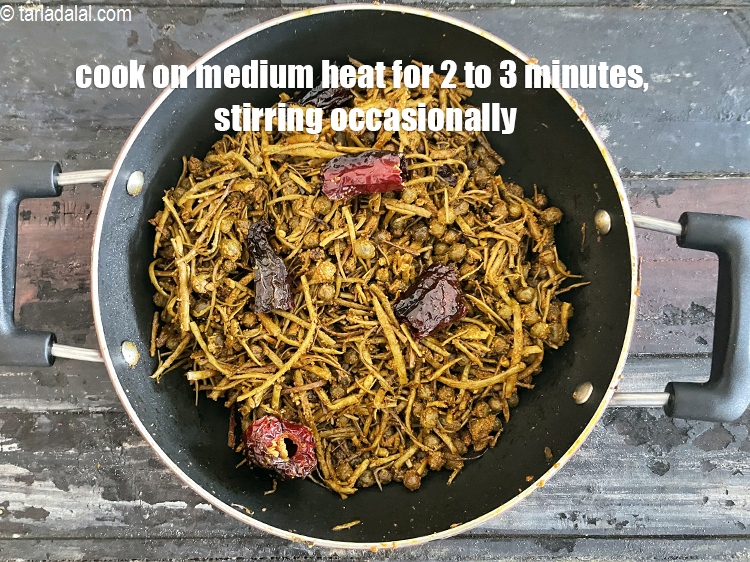
Cook on a medium flame for 2 to 3 minutes, while stirring occasionally.
-
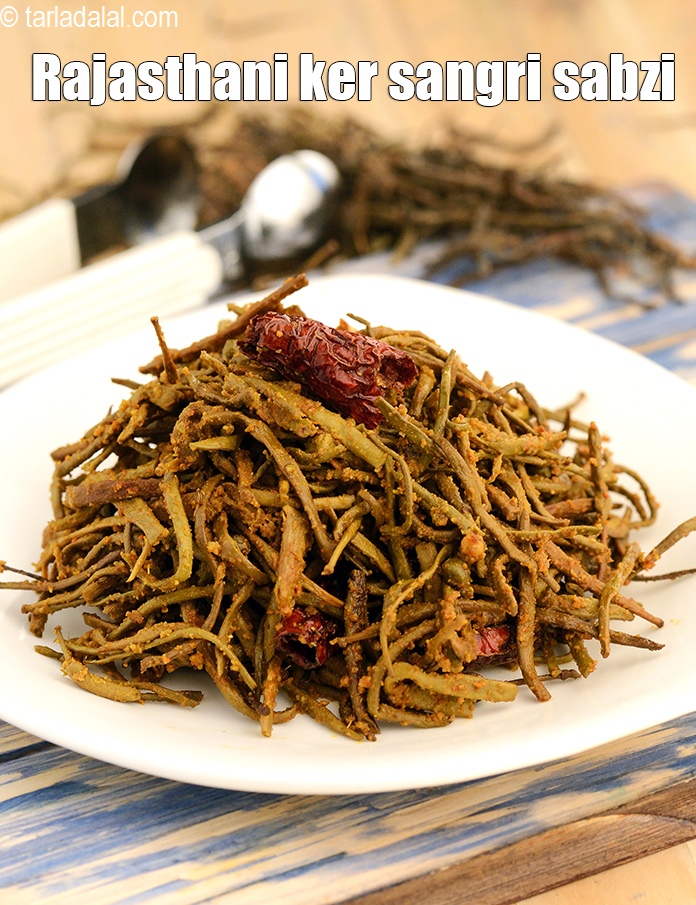
Serve ker sangri | Rajasthani ker sangri sabzi | traditional ker sangri | immediately.
-
To make ker sangri recipe | Rajasthani ker sangri sabzi | traditional ker sangri | heat 2 tbsp coconut oil or oil in a broad non-stick pan. Use coconut oil for a healthier diet.
-
-
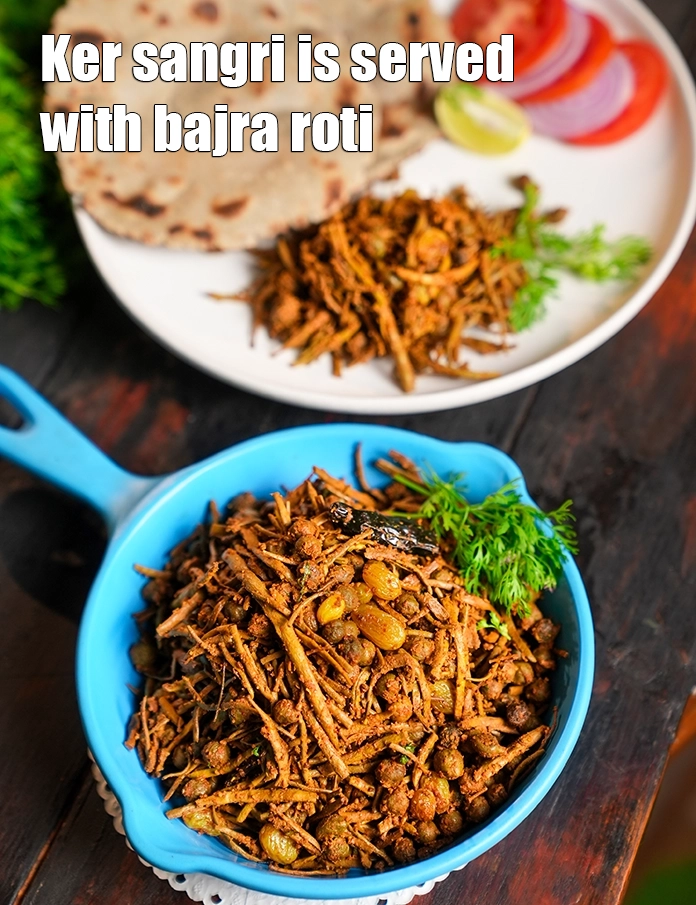
Ker sangri is served with bajra roti. You could also server it roti or jowar roti.
-
Nutrient values (Abbrv)per plate
| Energy | 78 Calories |
| Protein | 0.3 g |
| Carbohydrates | 1.8 g |
| Fiber | 0.1 g |
| Fat | 7.8 g |
| Cholesterol | 1 mg |
| Sodium | 1 mg |
Click here to view Calories for Ker Sangri
The Nutrient info is complete

Payal Parikh 86
Sept. 24, 2020, 9:16 a.m.
My family loves Sangri so I make this often for them, it has very less ingredients and yet taste fab !!
wolf
April 16, 2020, 1:30 a.m.

Tarla Dalal
April 16, 2020, 1:30 a.m.
Thanks for the feedback !!! Keep reviewing recipes and articles you loved.
Sharad jain
Sept. 27, 2019, 4:46 p.m.
Tarla Dalal
Sept. 27, 2019, 4:46 p.m.
Thanks for the feedback !!! Keep reviewing recipes and articles you loved.
Neta
Aug. 9, 2018, 1:52 p.m.
Ker Sangri ek rajasthani andaj me teaty subzi muje khane me aachi lagye
Tarla Dalal
Aug. 9, 2018, 1:52 p.m.
Glad you liked the Ker Sangri recipe.
navinbhai
Sept. 1, 2016, 5:46 p.m.
i ate it.given by rajasthani neighbour.delicious
Tarla Dalal
Sept. 1, 2016, 5:46 p.m.
Thanks Navinbhai. We are delighted you loved the recipe. Please keep posting your thoughts and feedback. Happy Cooking.
anuradha
April 12, 2016, 11:05 p.m.
Tarla Dalal
April 12, 2016, 11:05 p.m.
Hi Anuradha , we are delighted you loved the Ker Sangri recipe. Please keep posting your thoughts and feedback. Happy Cooking.
Seema
Nov. 27, 2013, 4:02 p.m.
Avinash
June 1, 2013, 9:59 p.m.
Please show all the receip of bikaneri food in Hindi
Tarla Dalal
June 1, 2013, 9:59 p.m.
Hi, You can visit the hindi website for the same https://www.tarladalal.com/recipesinhindi.aspx