Calories in Mullangi Sambar Recipe (Radish Sambar)
This calorie page has been viewed 9064 times
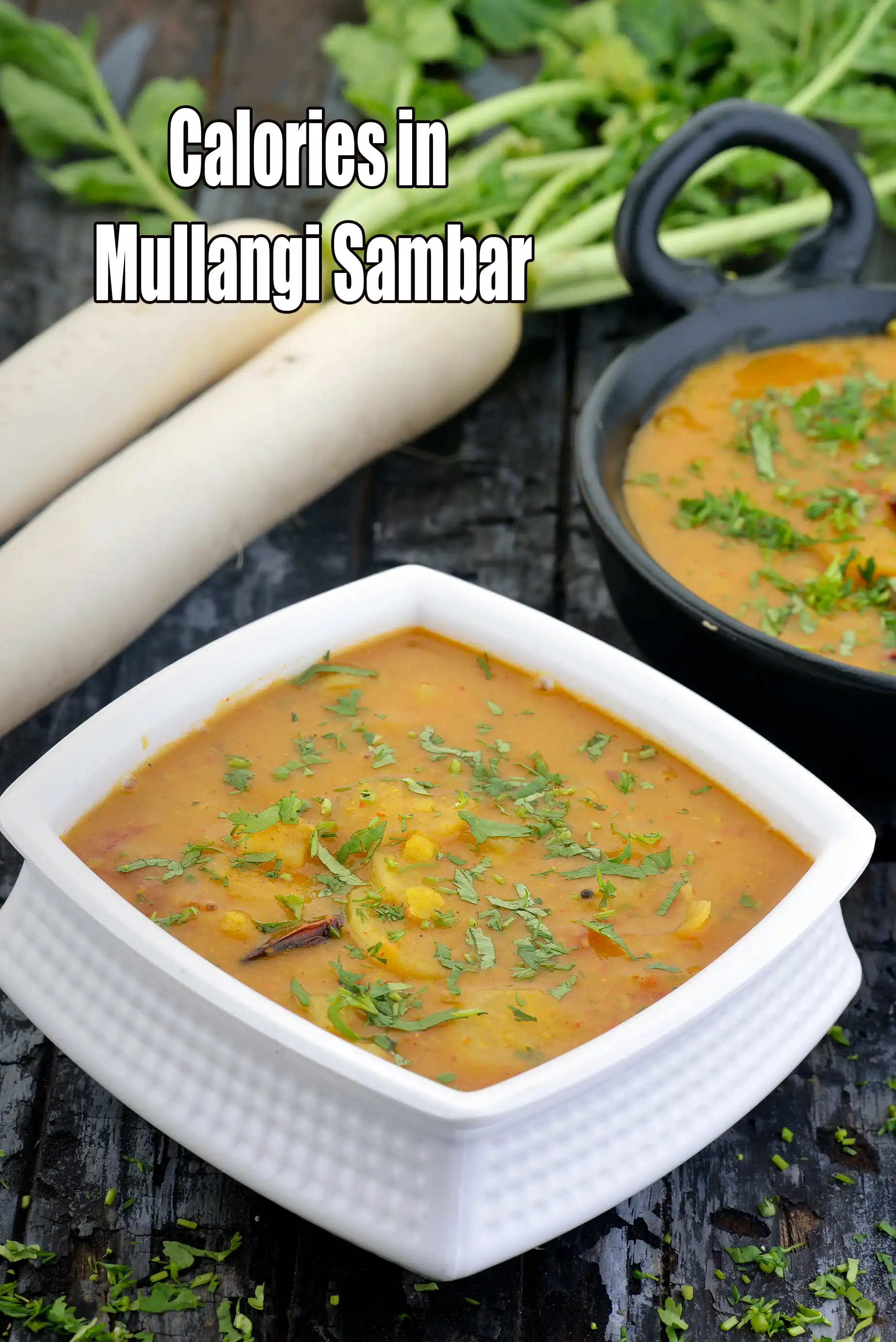
Table of Content

How many calories does one serving of Mullangi Sambar have?
One serving of Mullangi Sambar gives 166 calories. Out of which carbohydrates comprise 74 calories, proteins account for 22 calories and remaining calories come from fat which is 72 calories. One serving of Mullangi Sambar provides about 8.3 percent of the total daily calorie requirement of a standard adult diet of 2,000 calories.
166 Calories of Mullangi Sambar, 18.1g Carbs, 5.6g protein, 8g fat
Mullangi Sambar | Radish Sambar | Tamil Nadu Radish Sambhar | Mooli Sambar |
Mullangi Sambar, also known as Radish Sambar, Tamil Nadu Radish Sambhar, or Mooli Sambar, is a classic South Indian dish prepared using toovar dal (arhar dal), radish slices, and aromatic spices. The combination of turmeric, asafoetida, sambar powder, and tamarind water gives the dish its signature tangy, spicy, and comforting flavour. This sambar is cherished across Tamil Nadu for its simplicity and its ability to pair well with a wide range of South Indian meals.
Is Mullangi Sambar healthy ?
Mullangi Sambar, made with toovar dal, radish (mooli), tamarind, onions, tomatoes, and a flavourful South Indian tempering, is a nutritious and comforting dish enjoyed widely in Tamil Nadu and across South India. Radish gives the sambar a distinct aroma, while the dal provides body, creaminess, and plant-based protein. As a daily staple, Mullangi Sambar is naturally wholesome due to its combination of vegetables, lentils, and spices.
When evaluating “Is Mullangi Sambar healthy?”, the answer is an easy yes. It is rich in fiber, vitamins, minerals, and antioxidants, thanks to ingredients like radish, tomatoes, turmeric, and curry leaves. The dish is low in saturated fat and nutrient-dense, making it a balanced choice for most individuals. The use of toovar dal adds sustained energy, while coriander, hing, and spices support digestion.
Is Mullangi Sambar good for diabetics, heart and overweight individauls ?
For diabetics, Mullangi Sambar is generally safe and beneficial. Radish is a low-carb vegetable with a very low glycemic index, helping stabilize blood sugar. Toovar dal, though a carbohydrate source, releases glucose slowly due to its high fiber and protein content. The key for diabetics is portion control and pairing the sambar with small portions of rice, or ideally millets, idli, or dosa made from whole grains. Reducing oil slightly can further improve blood-sugar management.
For individuals with heart concerns, Mullangi Sambar is a heart-friendly dish when prepared with moderation in oil. The spices used—such as turmeric, curry leaves, and mustard seeds—provide anti-inflammatory and antioxidant benefits. Using just 1 tbsp oil for tempering, avoiding reheated oil, and increasing the amount of radish and tomatoeskeeps the dish low in saturated fats and high in cardio-protective nutrients. The absence of heavy creams or high-fat ingredients makes it suitable for daily consumption.
For those who are overweight or watching calories, Mullangi Sambar works wonderfully because it is low-calorie, filling, and high in fiber. The combination of vegetables and dal provides satiety, preventing overeating. Pairing it with steamed rice in controlled portions, or better yet, brown rice or millets, makes it even more weight-friendly. Since the dish contains no deep-fried components, it fits well into weight-management meal plans.
To make Mullangi Sambar even healthier, you can make a few simple modifications: reduce the oil used for tempering to 1–1½ tsp, include more radish and other vegetables like drumstick or pumpkin, replace some toovar dal with moong dal for easier digestion, or reduce tamarind for those with acidity issues. Pairing the sambar with millet rice, red rice, or brown rice instead of white rice improves fiber intake and glycemic control. Preparing the tempering fresh right before serving boosts flavour while keeping the dish light and nutritious.
| Value serving | % Daily Values | |
| Energy | 166 kcal | 8% |
| Protein | 5.6 g | 9% |
| Carbohydrates | 18.1 g | 7% |
| Fiber | 3.41 g | 11% |
| Fat | 7.99 g | 13% |
| Cholesterol | 0.0 mg | 0% |
| VITAMINS | ||
| Vitamin A | 268.7 mcg | 27% |
| Vitamin B1 (Thiamine) | 0.2 mg | 11% |
| Vitamin B2 (Riboflavin) | 0.1 mg | 3% |
| Vitamin B3 (Niacin) | 1.0 mg | 7% |
| Vitamin C | 15.3 mg | 19% |
| Vitamin E | 0.0 mg | 1% |
| Folic Acid (Vitamin B9) | 40.3 mcg | 13% |
| MINERALS | ||
| Calcium | 52.6 mg | 5% |
| Iron | 1.1 mg | 6% |
| Magnesium | 29.0 mg | 7% |
| Phosphorus | 101.7 mg | 10% |
| Sodium | 24.4 mg | 1% |
| Potassium | 360.8 mg | 10% |
| Zinc | 0.4 mg | 2% |
Percent Daily Values are based on a 2000 calorie diet. Your daily values may be higher or lower depending on your calorie needs.
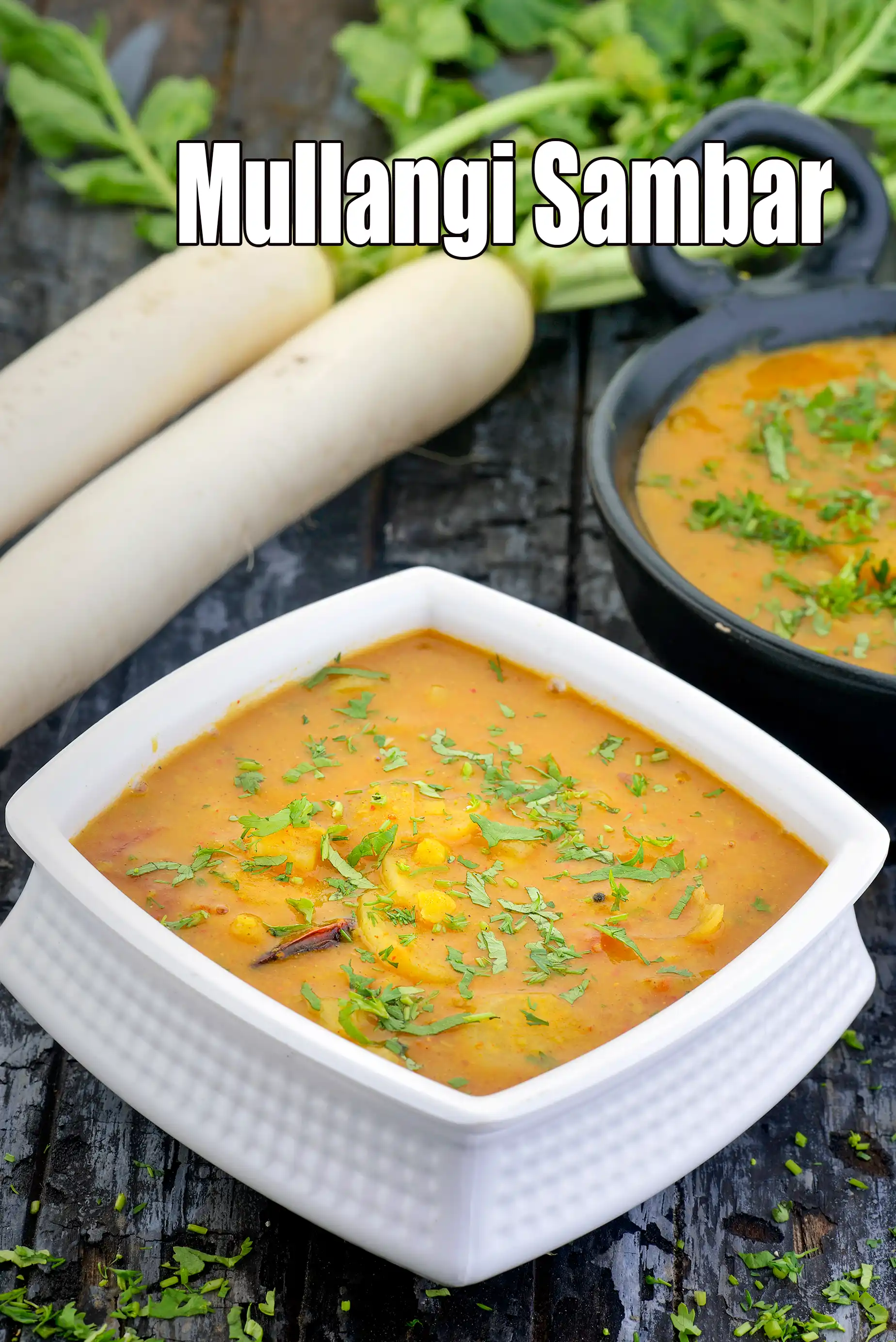
Click here to view Mullangi Sambar, South Indian Radish Sambhar



-16045.jpg?w=400&format=webp)